Blog

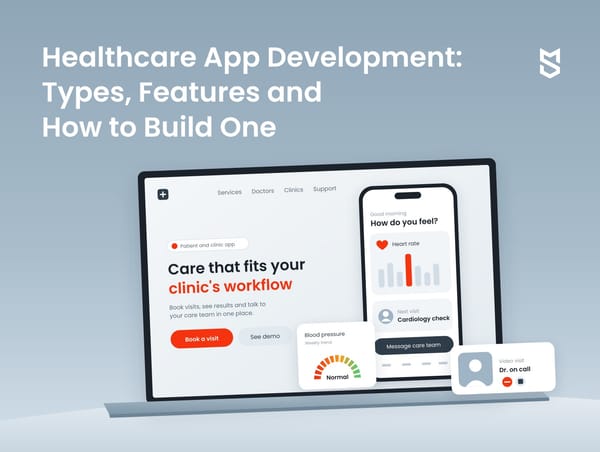
Healthcare App Development: Types, Features and How to Build One
19 November 2026
Healthcare App Development: Types, Features and How to Build One

Early decisions about data, regulation and clinical access shape the scope of healthcare app development. This guide covers app types, features, rules, integrations, build steps and cost. Highlights * Your company's role, your data and the app's stated purpose decide which rules apply. * Record-system access and approvals can set the timeline, so map them before estimating. * Custom development is worth evaluating when required workflows exceed a platform's capabilities. Healthcare

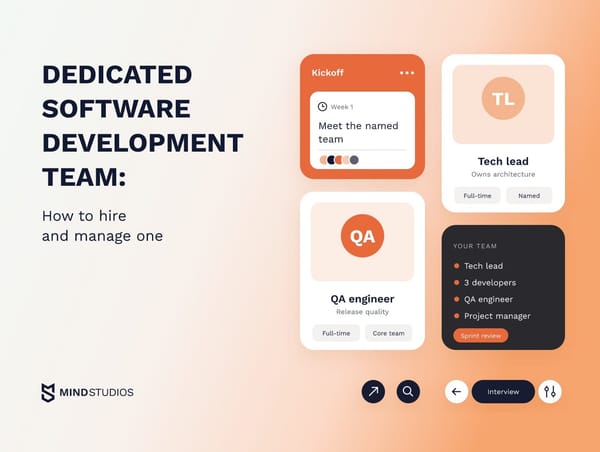
Dedicated Software Development Team: How to Hire and Manage One
18 November 2026
Dedicated Software Development Team: How to Hire and Manage One

A dedicated software development team may shape your product across years of releases. Here's how to choose, contract and manage one you can keep. Highlights * Dedicated teams fit long roadmaps with shifting requirements, rarely short frozen scopes. * Verify the proposed team through interviews, written answers and a scoped pilot. * Named roles, replacements and code handover belong in the contract. A dedicated development team is a group of engineers, QA specialists and a project m

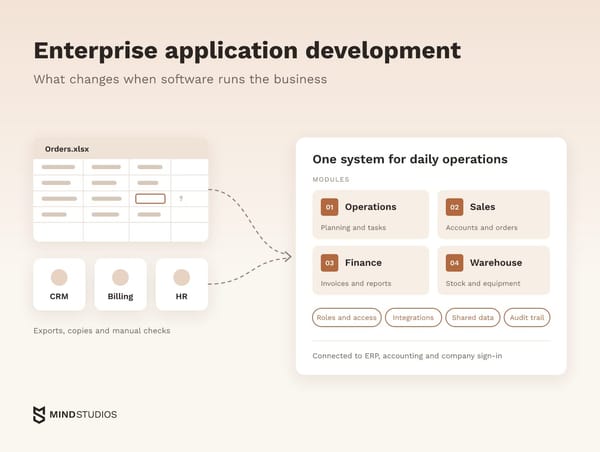
Enterprise Application Development: What Changes as You Scale
18 November 2026
Enterprise Application Development: What Changes as You Scale

When spreadsheets and SaaS subscriptions stop holding operations together, enterprise application development becomes a business decision. This guide covers what changes, how to pick a path and where these projects break. Highlights * Roles, integrations and data ownership set the scope and cost of enterprise software. * Test SaaS, low-code and custom options against one real workflow first. * Start with a process that has a clear owner and a testable workflow. Enterprise applicatio

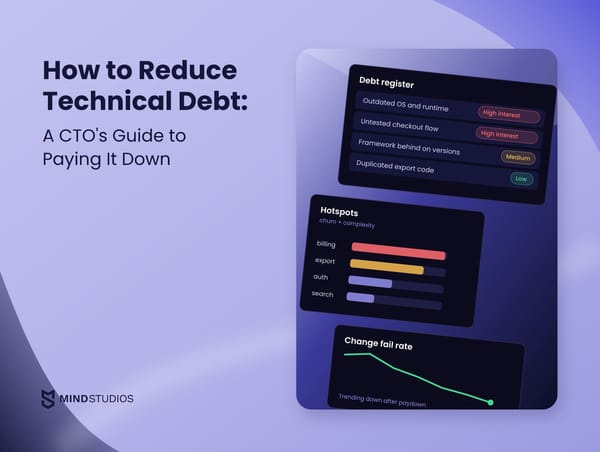
How to Reduce Technical Debt: A CTO's Guide to Paying It Down
18 November 2026
How to Reduce Technical Debt: A CTO's Guide to Paying It Down

Every sprint spent working around old code is interest on a loan nobody budgeted. Here's how to reduce tech debt with a register, a priority list and a budget the board approves. Highlights * Measure debt by the interest it charges each sprint, using code and DORA metrics. * A register with owners and review dates turns complaints into a funded plan. * Pay down high-interest debt on the roadmap's path first; stable old code can wait. To reduce technical debt, measure what it costs y

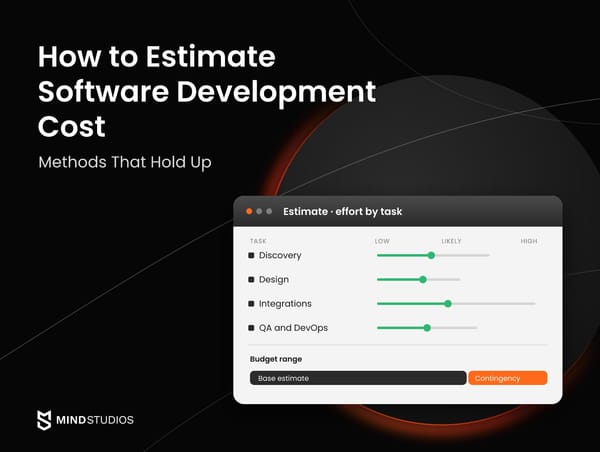
How to Estimate Software Development Cost: Methods That Hold Up
17 November 2026
How to Estimate Software Development Cost: Methods That Hold Up

A number on a proposal is only as good as the scope and method behind it. This guide to software development cost estimation shows how to build that number and how to test it. Highlights * An estimate is a range with assumptions. A budget adds a risk reserve. * Pick the method by how much of the scope is known. * Compare vendor proposals one deliverable at a time, assumptions first and totals last. How to estimate software development cost before signing a contract depends on three

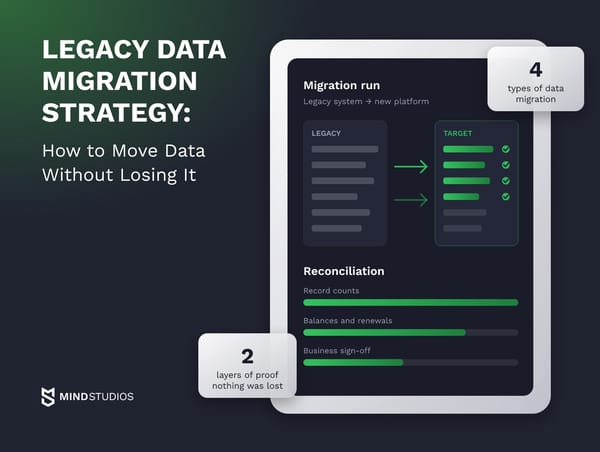
Legacy Data Migration Strategy: How to Move Data Without Losing It
17 November 2026
Legacy Data Migration Strategy: How to Move Data Without Losing It

A missing subscription can make a system replacement feel broken from the first login. This guide shows how to run legacy data migration so the records your business needs arrive intact and verified. Highlights * Decide what to move, archive or retire before you map a single field. * Match the migration approach to downtime tolerance and the consequences of failure. * Prove completeness with layered reconciliation and keep a rollback path past cutover. Legacy data migration is the p

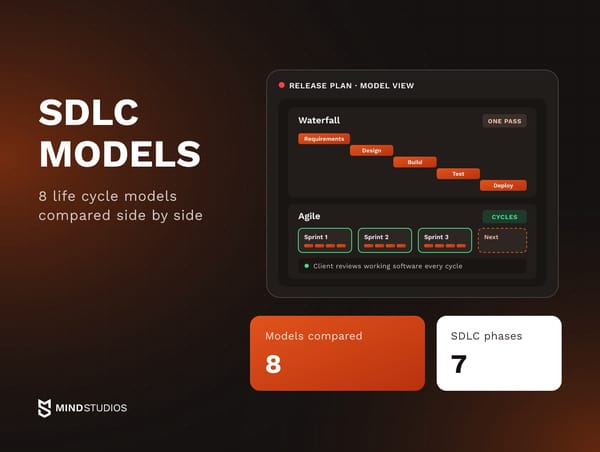
SDLC Models: 8 Software Development Life Cycle Models Compared
17 November 2026
SDLC Models: 8 Software Development Life Cycle Models Compared

SDLC models shape when you review working software and what a change costs. Here are eight of them side by side, with what each one asks of you. Highlights * Linear models suit stable requirements. Iterative models suit products still taking shape. * The model sets how often you decide, review and accept work. * Five questions narrow the choice to a model or a hybrid. Most proposals a development partner puts in front of you rest on one of eight SDLC models: waterfall, V-model, incr

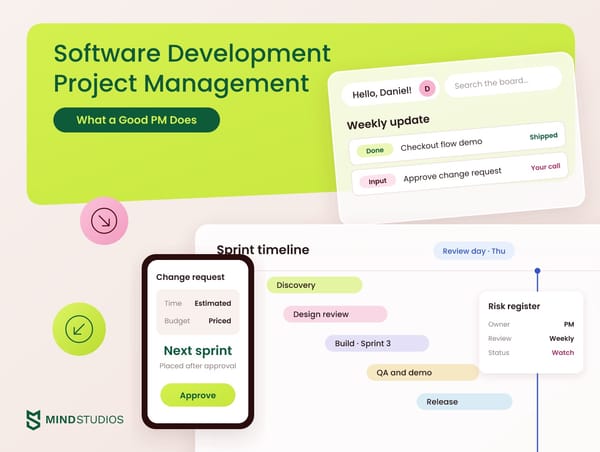
Software Development Project Management: What a Good PM Does
17 November 2026
Software Development Project Management: What a Good PM Does

Software development project management decides how quickly you learn where your build really stands. This guide shows how to judge it from the client's side before you sign. Highlights * A good PM makes your project's real status something you check without chasing anyone. * Every phase, plan and delivery cycle should leave you an output you can verify. * Before signing, ask who owns delivery and how decisions, changes and risks are recorded. Software development project management

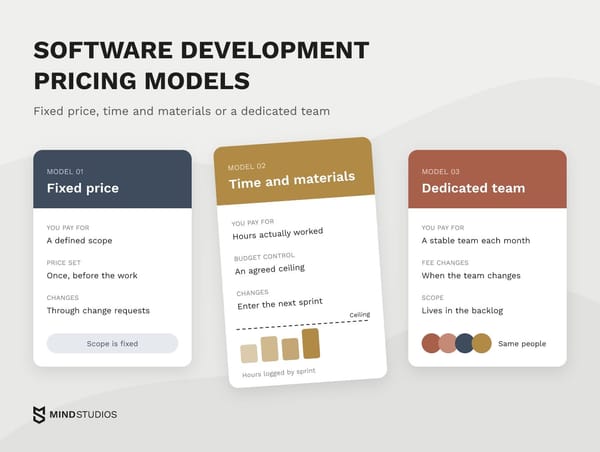
Software Development Pricing Models: Fixed Price vs Time and Materials
17 November 2026
Software Development Pricing Models: Fixed Price vs Time and Materials

Fixed bids, hourly billing and dedicated team contracts answer one question differently: who pays when the plan changes? We compare how each prices the work, the hybrids and the contract terms. Highlights * Each model splits three risks differently: overruns, changes and idle capacity. * A defined scope suits a fixed bid. Evolving products suit hourly or team billing. * Ceilings, rate reviews and defect cover come from terms you write into the contract. There are three main software

Have a technical challenge?

Let's discuss
book consultation