
Mind Studios really think about the problem; they're not yes men. They challenge their clients and think about long-term solutions.
Software reengineering and modernization starts here: we assess what you have, recommend what's actually needed, and execute without disrupting what's already working.

SINCE 2013
in business
70%
of clients stay 3+ years
4.9 on


34 reviews


ISO 27001 & ISO 9001

The codebase has years of shortcuts layered into it. What used to take a week now takes a month. Engineers spend more time navigating the system than improving it.
The system was sized for yesterday's traffic. Under load it slows, fails, or requires constant intervention. The architecture that got you here isn't the one that gets you to the next stage.
The feedback is consistent: search feels slow, features feel dated, small frustrations add up. The platform works — but it no longer feels like a product people want to use.
Nobody fully understands how it was built. Documentation is sparse. Changes carry risk nobody can fully quantify. Every engineer who touches it works carefully and slowly.
The honest question hasn't been answered yet: is this worth improving incrementally, or has the foundation become the problem? Most teams don't know until someone looks properly.

When companies come to us:
"Our codebase is five years old and every change breaks something else."
What we deliver:
Tech debt doesn't announce itself — it accumulates quietly until a feature that should take a week is taking a month. Our software code refactoring and restructuring software work modernizes dependencies and rebuilds internal structure while preserving external behavior. The goal is to modernize and optimize your legacy systems without stopping your business. Your users see nothing change. Your engineers start moving again.
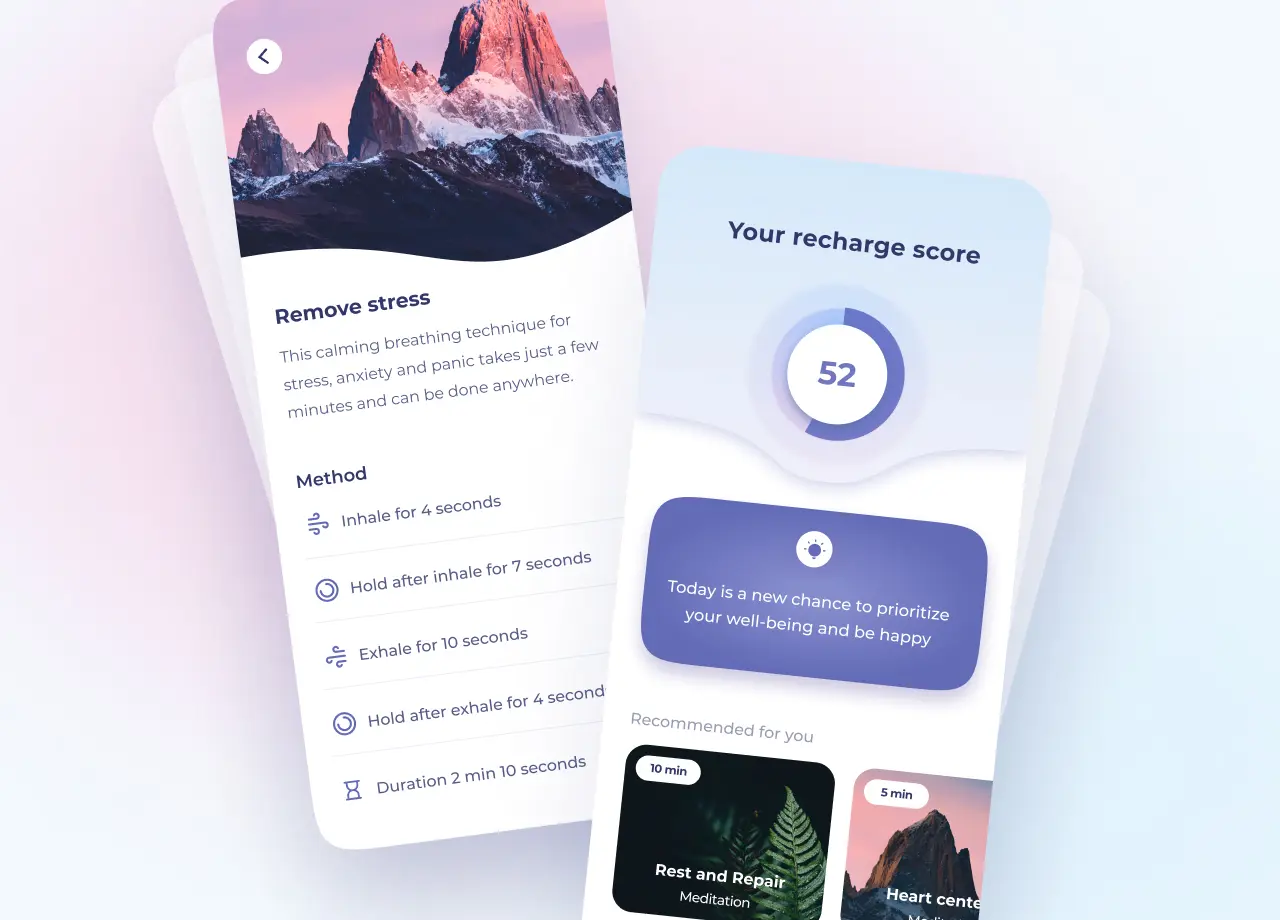
Envol came to us with an existing Android app whose foundation couldn't support what the product needed to be. After assessing the codebase, we recommended a full rebuild — and explained exactly why patching wasn't the answer. The result: 12,000 downloads, 8,000+ active users, 43% retention on the rebuilt platform.
When companies come to us:
"Our system is slow, unreliable, and our users are noticing."
What we deliver:
Slow systems lose users before they ever complain. Legacy software modernization at the performance layer means diagnosing root causes — database bottlenecks, missing caching layers, inefficient queries, infrastructure gaps — and addressing them systematically. Load testing, database optimization, CDN architecture, monitoring setup. The goal is a system that handles real-world traffic without intervention, and a team that stops getting paged at 2am.

MyMP3Pool users had been reporting slow performance and search issues for years — specific frustrations that were driving churn toward competitors. After the rebuild, every top complaint was resolved. Users experienced the transition as a redesign — 67.9% satisfaction rate post-launch, all top user complaints resolved.
When companies come to us:
"Our system can't handle our growth. It crashes under load."
What we deliver:
The platform that handled your first 10,000 users wasn't designed for your next 100,000. We migrate to cloud infrastructure — typically AWS — optimize for performance at scale, establish proper DevOps practices, and architect for the traffic you're heading toward, not the traffic you have today.

Fitr's platform was struggling under load — slow response times, security concerns, infrastructure that couldn't keep pace with growth. We migrated the entire system to AWS without disrupting the live platform. Average response time improved by 85.5%, transaction throughput increased by 82.1%, with zero user-visible errors during load testing.
When companies come to us:
"We have a system, but the foundation is wrong. We need to start over — the right way."
What we deliver:
Sometimes incremental improvement isn't enough. When the foundation itself is the problem, we recommend a full rebuild software engagement — done in a way that protects what you've already built: your user base, your data, your subscriptions, your community. The engineering challenge isn't just rebuilding — it's making sure active users experience the transition as an update, not a disruption.
MyMP3Pool had been running on Drupal since the 2000s. We rebuilt the entire platform in Vue.js and Rails while running both systems in parallel with a real-time sync layer — active paying subscribers never noticed the transition. Users experienced it as a redesign. 67.9% satisfaction rate post-launch, all top user complaints resolved.
Our software modernization services start with understanding every existing system before recommending what to do with it.
Understand
Before we recommend anything, we audit. Architecture, codebase, infrastructure, performance, security — the full picture. This isn't a sales exercise designed to justify a large project. It's a diagnostic. The output is an honest assessment: what's working, what isn't, what the real risks are, and what your options are.
Sometimes the audit reveals the system is more fixable than it looks. Sometimes it reveals the opposite. Either way, you need to know before you commit to a path.
Plan
We map out an approach based on what the system actually needs — not what generates the largest project scope. That might mean incremental refactoring while the system stays live. It might mean rebuilding specific components while leaving others intact. Occasionally a full rebuild is the right call — and when it is, we say so plainly and explain why.
Modernize Incrementally
We execute in stages, keeping your existing system running while improvements are deployed. No big-bang rewrites that leave your users without a working product for months. Each stage delivers measurable improvement before the next begins. When active subscribers or paying users are involved, we engineer the transition so they experience it as an update — not a disruption.
Stabilize and Evolve
After modernization, a system needs monitoring, tuning, and continued development. The team that modernized your system understands it more deeply than anyone else — and that accumulated knowledge is what makes the next phase of development faster, safer, and better.
It's why 70% of clients who come to us for modernization stay for long-term development. The work doesn't end when the system is fixed. That's usually when the real building begins.

Every recommendation is driven by what your system actually needs. We audit honestly, plan incrementally, and stay long enough to see the improvements compound.


The team that modernizes your system understands it more deeply than anyone else will. That understanding is the foundation everything else is built on.
Every system has history — decisions made under pressure, workarounds that became permanent, dependencies nobody documented. The team that lived through the modernization carries that knowledge. A new team inherits the code but not the context.
Once the immediate problems are solved, the roadmap opens up. New features, integrations, and capabilities all move faster when the team already understands the foundation — no ramp-up, no rediscovery, no expensive surprises.
A team that's staying for the long term has no incentive to over-engineer or gold-plate. We flag decisions that will create problems later because we'll be there to deal with them.
We learn how your business works, not just how your system works. Over time, that means fewer misalignments, faster decisions, and a team that anticipates what you need before you ask.
The work doesn't end when the system is stable — that's usually when the real building begins. Most of our modernization engagements evolve into multi-year partnerships because the value keeps compounding.
Fitr came to us as a maintenance request. Seven years later, we're still building together — £10M+ in coach earnings, multiple product expansions. 70% of clients who come to us for modernization stay for long-term development.
Mind Studios really think about the problem; they're not yes men. They challenge their clients and think about long-term solutions.

From the beginning, the Mind Studios team clearly understood what we were trying to achieve with our project. I appreciated how the team handled everything, and we’re already discussing what’s next.

Mind Studios makes the project personal instead of just thinking of the income that comes from it. The team is very competent in what they do, always delivers on time, and, most important, is cost-efficient.

Our friends at Mind Studios will continue to be an important part of our team as we continue to evolve and optimize our user experience and bring new features to life.

We are actively working with the MindStudios for more than 2 years now and it has been an absolute pleasure. They deliver high-quality work, brainstorm with us on ideas and are capable of turning all ideas into reality. We will continue to work with them in the future!

Mind Studios listened intently to our idea and approach and then constructively challenged us on the right path to success! They demonstrated an uncompromising commitment to exceptional performance in the most challenging environment.

I was impressed with their ability to deliver high-quality work on time. Professional and reliable, Mind Studios strictly adhered to the deadline and communicated regularly throughout.

I have found Mind Studios to be unfailingly brilliant, thoughtful, positive, patient, warm, supportive and nice, and committed to the highest standards of excellence.

Mind Studios has an exceptional ability to understand customer needs and deliver a high-quality product. Our collaboration has resulted in high-quality, fast, and cost-effective development of custom software that exceeds our customer's needs and results in high ROI.

Mind Studios has done an amazing job. While I’d heard horror stories about outsourcing, I’ve had no issues at all with development or general output. Their services are extremely fairly-priced for the quality of the development you’re getting. They’re truly top-notch.

Mind Studios is our go-to provider for all aspects of technology. They set up the server and storage systems for all of the content. They created all the technology for the different sections of the website and the app itself. I love the way these guys work. There is no ego involved.
We migrated the entire MyMP3Pool platform to AWS, rebuilding the ingestion pipeline, updating a stack that hadn't moved in years, and keeping every active subscription intact throughout. No downtime. No discovery phase. We already knew the system.

Seven years ago, Fitr was an idea. Today it's a platform serving fitness professionals across multiple countries. We've been part of every significant technical decision in between — architecture, scaling, new features, infrastructure — and we're still here.
Austria's regional media delivery network — fleet management, courier tracking, route optimization, and financial operations unified in one platform.




Most systems have more worth saving than their owners realize — and a clear path forward once someone looks at them properly. Let's start there.
Software code refactoring improves internal structure without changing external behavior — faster, cleaner, easier to maintain, but the same product. Application reengineering goes deeper: it rethinks the architecture, replaces outdated technologies, and restructures the system to support new requirements and future development. Rebuilding means starting over — the foundation is replaced entirely while protecting what exists: user data, subscriptions, integrations. The right path depends on what the audit finds. We don't recommend a path before we've looked properly.
Legacy software repair and modernization almost always has to happen while the system is live. Our approach is incremental — we identify the highest-risk or highest-debt areas first, isolate them, and improve them in phases. We run both systems in parallel where needed, use feature flags to control rollout, and validate at each stage before moving forward. The strategy is to improve quality and performance continuously rather than stopping everything for a big-bang migration. Active users should experience the upgrade as a product improvement, not a risk event.
It depends on what the audit finds. A focused refactoring project addressing specific architecture problems typically takes 2 to 4 months. A full legacy system modernization with cloud migration, integration updates, and infrastructure rebuild generally runs 6 to 12 months. A complete rebuild is scoped after the audit — timeline depends on the complexity of what needs to be protected during transformation. We don't quote timelines before the audit because the honest answer requires seeing the system first.
It starts with an audit — architecture, codebase, infrastructure, security, deployment setup. That's not a sales exercise; it's a diagnostic. The output is an honest picture of what's working, what isn't, and what your real options are. From there, we agree on a phased plan and execute incrementally — this is what our software reengineering services look like in practice. As a tech partner that redesigns and re-engineers enterprise software, we stay involved through stabilization and beyond. Our software product reengineering services don't get handed off at the end of a phase — the experts who audited the system are the ones building the improvements. That's also what makes us effective as software reengineering services providers for long-term engagements.
Cost depends entirely on scope, which is why we audit before quoting. A focused software code refactoring engagement — targeting a specific bottleneck or restructuring software in one area — typically runs $50K–$100K. A full legacy software modernization project covering cloud migration, architecture rebuild, and integration updates generally falls between $100K–$300K depending on system complexity. As experts that have rebuilt outdated tech products across multiple industries, we've seen the range vary widely — the audit determines where your project actually sits. We offer a free pre-contract consultation and technical assessment so you understand the real scope before committing to any budget. As a reliable technology partner for legacy software product re-engineering, we'll also tell you if the cost of modernizing outweighs the cost of rebuilding.
Into custom software development
Outdated systems often drain budgets and hold back business growth. Our guide explains what legacy system modernization truly means and how to upgrade yours without disruptions.
According to statistics from Clutch, 83% of small businesses will maintain or increase their spending on outsourced business services in 2023. And IT outsourcing is among the top three most popular requests, alongside marketing and design.
For business owners new to running digital products, a software audit might seem like a technicality. But did you know that investing resources in regular software examinations can actually help you gain more users, save your business money, and even protect you from legal risks?
