Scaling & Architecture

Industry:

Insights on scalable software architecture, distributed systems, and platform engineering for companies whose current systems are becoming the bottleneck. Covers microservices vs monolith decisions, database scaling, API design, multi-platform builds, and the infrastructure choices that compound over time. Drawn from Mind Studios' experience building complex software across logistics, healthcare, and real estate.

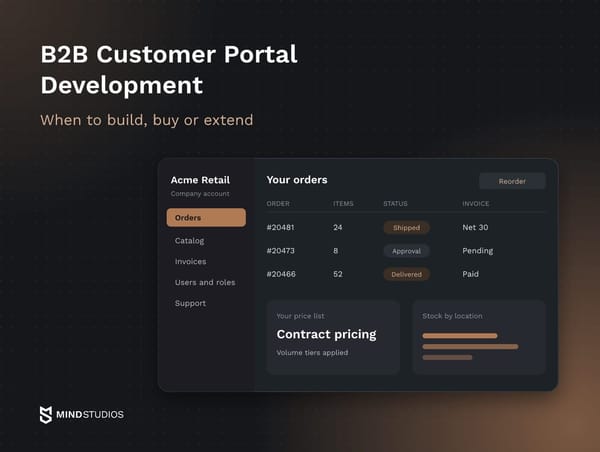
B2B Customer Portal Development: When to Build, Buy or Extend
13 November 2026
B2B Customer Portal Development: When to Build, Buy or Extend

A B2B customer portal lets business customers manage orders and accounts online. This guide covers portal types, buyer features, integrations and the choice between buying, extending and building. Highlights * The portal type follows the relationship: buyers, dealers, key accounts or service clients. * Adoption depends on account pricing, trusted stock data and real user roles. * Custom development deserves an estimate when pricing or approval logic sets you apart. A B2B customer po
Web App vs Mobile App vs PWA: What to Build First
13 November 2026
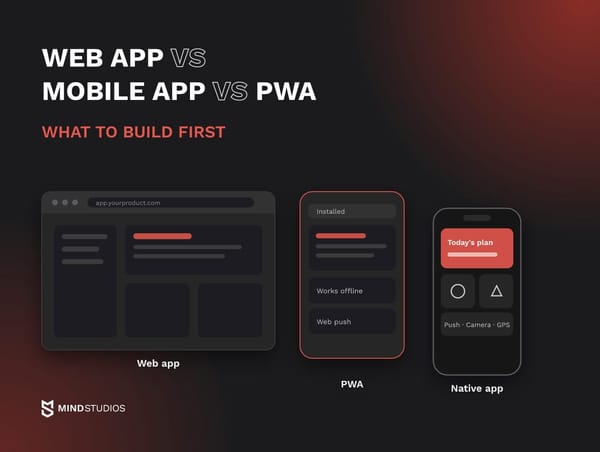
Web App vs Mobile App vs PWA: What to Build First

Web app vs mobile app vs PWA for products with paying users: PWA limits, ownership cost and what to build first. Highlights * Name the constraint of your next stage, then the role it depends on. * PWAs can cover install, offline and push, under iOS and Android conditions. * Different user roles can justify different platforms on one shared API. For a product with paying users, the platform choice is made per user role. Desk roles and search visitors fit a web app. A mobile group tha

Mobile App Backend Development: Backend as a Service or Custom Build
12 November 2026
Mobile App Backend Development: Backend as a Service or Custom Build

Mobile app backend development starts with a choice: rent a backend, build your own or split the work. Here is how to decide and how to leave Firebase when it stops fitting. Highlights * Managed services simplify initial delivery, while usage patterns determine later costs. * Own core logic where provider limits block the product; rent shared functions. * Pick any provider by how you would leave it, starting with user sign-in. Mobile app backend development offers a product with li

SaaS Product Development: How to Build a SaaS Product That Scales
11 November 2026
SaaS Product Development: How to Build a SaaS Product That Scales

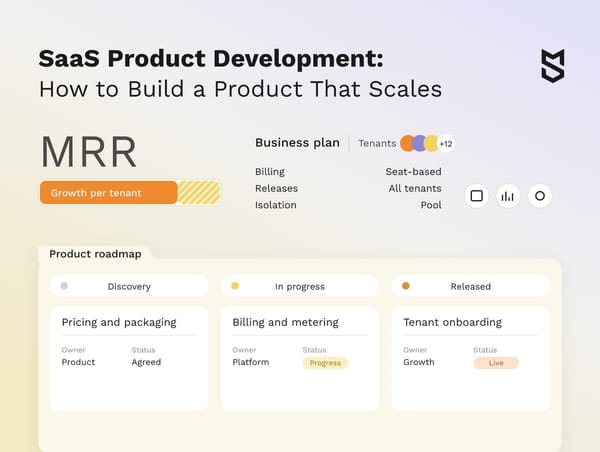
SaaS product development covers building and continuously improving a subscription product. This guide walks through the lifecycle, 10 SaaS-specific steps, decisions before the build, team roles, costs and scaling after launch. Highlights * Tenancy, billing and integration choices set scaling costs before the first release. * Staged releases limit exposure to changes; per-tenant monitoring helps detect regressions early. * Account metrics show where to look; root-cause checks decide w

Multi-Tenant SaaS Architecture: Trade-offs for Scaling Products
11 November 2026
Multi-Tenant SaaS Architecture: Trade-offs for Scaling Products

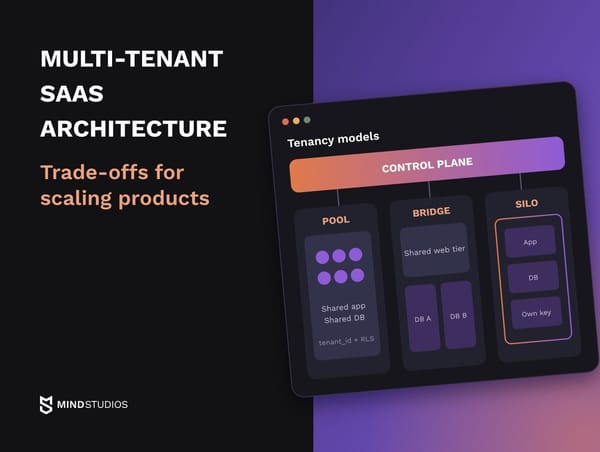
Your first enterprise deal will test the tenancy model you picked at launch. This multi-tenant architecture guide helps CTOs choose isolation and identity setups, and plan a path to dedicated stacks. Highlights * Choose the tenancy model per layer and per tenant, and keep it changeable. * Put the tenant into data, keys and every request from the first release. * Enterprise contracts and new regions are the usual reasons to move a tenant. Multi-tenant SaaS architecture serves many cu

Location-Based Mobile App Development: How to Create a Location-Based App
10 November 2026
Location-Based Mobile App Development: How to Create a Location-Based App

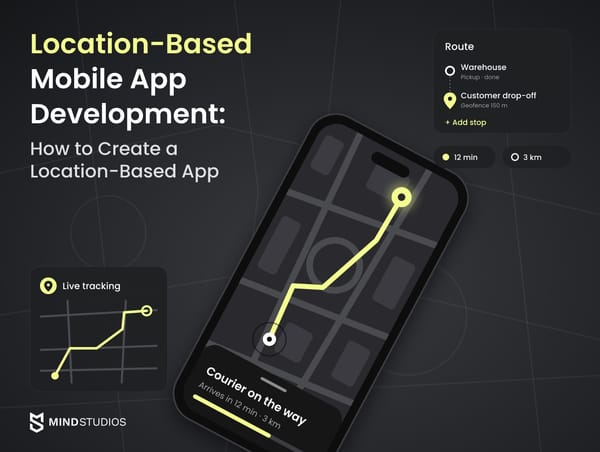
A location-based app looks like a map with pins. Behind the map, the workflow decides how often the app needs a position, what happens when it can't get one and what the map provider bills. Highlights * Positioning choice trades accuracy for battery, so settle it before design. * Background location rules differ on iOS and Android, so test permissions on both. * Map providers bill on different units, so compare them at target volume. Most of the work in location-based mobile app dev

Workflow Process Automation: A Practical Guide for Growing Companies
10 November 2026
Workflow Process Automation: A Practical Guide for Growing Companies

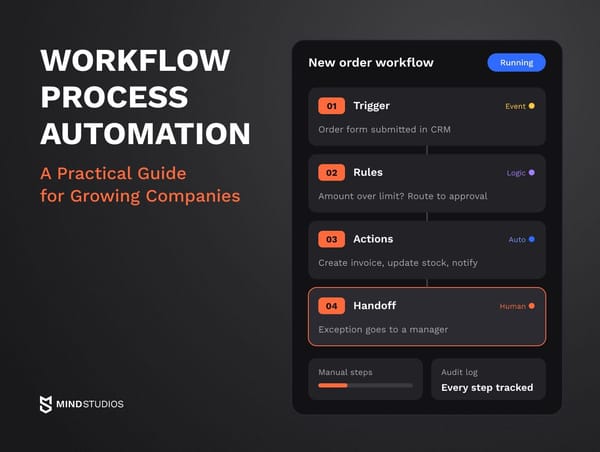
Manual handoffs grow faster than headcount. Here's how workflow automation works, what to automate first and when no-code tools stop being enough. Highlights * Simplify a process before workflow automation locks in every step. * Pilot only processes with an owner, a baseline and an exception path. * Choose no-code, a platform or custom code by data, logic and recovery needs. Workflow process automation is software that moves work between people and systems by rules. A trigger starts

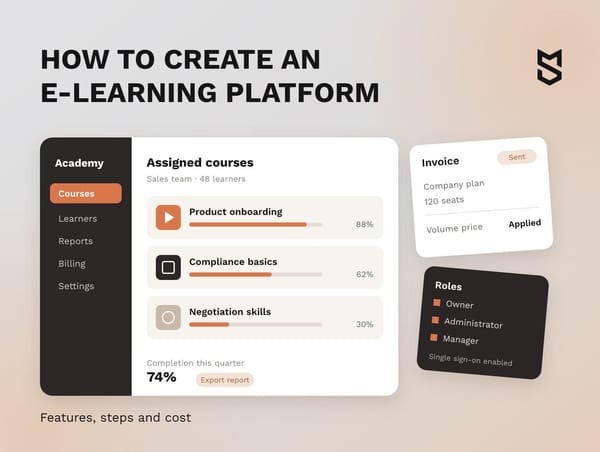
How to Create an E-Learning Platform: Features, Steps and Cost
10 November 2026
How to Create an E-Learning Platform: Features, Steps and Cost

Company accounts, invoices and reporting can decide whether an existing learning platform still fits your business. Here's how to plan an e-learning platform around them. Highlights * Pick the platform type by who learns, who pays and who reads reports. * Extending a ready-made platform can beat a rebuild when the gaps are in billing. * Plan integrations, accessibility and support before code: they shape scope and budget. To create an e-learning platform for a company, settle four t

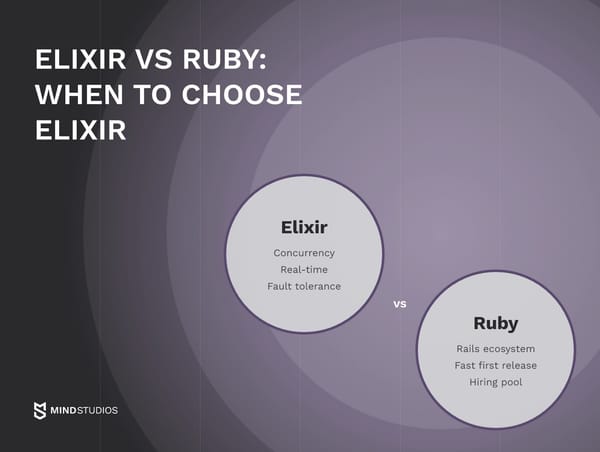
Elixir vs Ruby: Why and When to Choose Elixir for Your Project
10 November 2026
Elixir vs Ruby: Why and When to Choose Elixir for Your Project

Your Ruby on Rails backend keeps pace with the roadmap until open connections start driving your server count. This guide helps you judge whether an Elixir service would fix that bottleneck or Ruby can still carry it. Highlights * Elixir earns its place when open connections drive your server count. * Rails remains a strong fit for CRUD work when your team already ships Ruby. * A separate Elixir service pays off only for a measured, isolated bottleneck. The Elixir vs Ruby choice sta

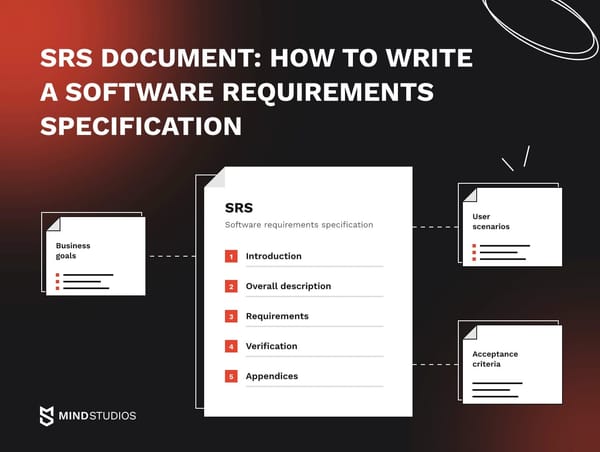
SRS Document: How to Write a Software Requirements Specification
10 November 2026
SRS Document: How to Write a Software Requirements Specification

An agreed specification gives your team a shared basis for estimates and acceptance tests. Here's how to write a software requirements specification your development partner can price, build and verify. Highlights * An SRS turns business goals into requirements a team can estimate and test. * Testable criteria and mapped integrations make an estimate defensible. * Mobile apps add store rules, OS targets, offline behavior and privacy disclosures. An SRS document (software requirement

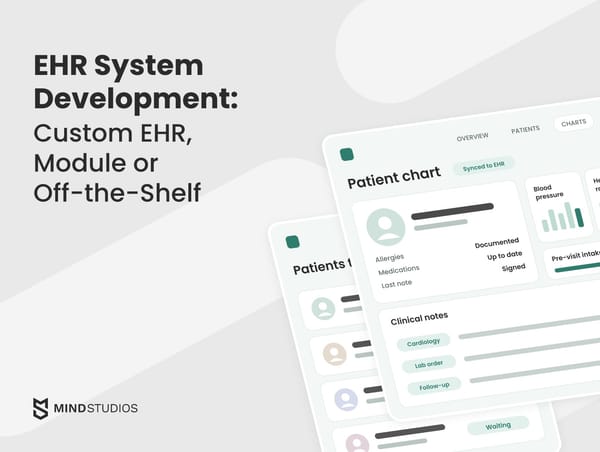
EHR System Development: Custom EHR, Module or Off-the-Shelf (2026)
6 November 2026
EHR System Development: Custom EHR, Module or Off-the-Shelf (2026)

Your EHR holds the clinical record, and your product supports the workflows around it. This guide shows when to configure the EHR system you run, when to extend it through FHIR and when to build. Highlights * For customers using Epic, a module can add your workflow while Epic keeps the record. * Integrations and certification scope move budget and timeline more than screens do. * HIPAA safeguards, audit trails and BAAs belong in the architecture before code. EHR system development i

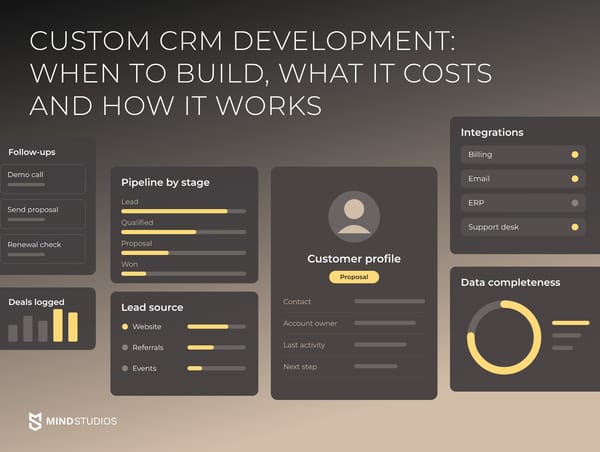
Custom CRM Development: When to Build, What It Costs and How It Works
6 November 2026
Custom CRM Development: When to Build, What It Costs and How It Works

Your CRM worked for your first sales team; now part of the pipeline lives in side spreadsheets. Here's how to decide whether a custom CRM pays off and what building one takes. Highlights * Measure what CRM workarounds cost before you treat them as a reason to build. * Compare both options over 36 months and count migration and integrations once in each. * Plan for scope, integration and adoption risks before the first sprint. Custom CRM development means designing and building a CR

Have a technical challenge?

Let's discuss
book consultation