
 ChatGPT
 Perplexity

Technical due diligence is the review investors and buyers run on your product before a deal. This guide covers what they check, the red flags that move terms and how to prepare.
Highlights
- Reviewers test whether your product can carry the buyer's growth plan.
- Single points of failure, license conflicts and key-person risk can shift deal terms.
- Prepare evidence and named owners before the data room opens.
Technical due diligence is an independent review of a company's product, code, infrastructure, security and engineering team before an investment or acquisition. It also goes by technology due diligence, tech due diligence or IT due diligence, and it answers one question: Can this technology carry the plan the buyer is paying for?
This guide is for founders with a round, a strategic investor or an exit ahead, and for those buying a product or taking over code. Our team builds and modernizes live products, and we have caught the kinds of risks reviewers look for before they caused outages.
If a round or a sale is on your calendar, start by finding out which parts of your system a reviewer would flag today.
What is technical due diligence?
Technical due diligence answers the question that financial and legal reviews leave open: Can the product behind the numbers support the investor's or buyer's plan? It covers architecture, code, infrastructure, security, data, intellectual property and the team.
Financial reviewers check whether revenue and costs are real, and legal reviewers check contracts, ownership and liabilities. A SaaS business with clean books can still run on a platform that needs a rebuild before it can serve twice as many customers. The technical review is there to catch that gap.
Types of technical review and their scope
Who orders the review decides which scope questions you settle first:
| Type of review | Who orders it | Scope questions |
|---|---|---|
| Investor review before a round | A venture or growth investor | Areas in scope, full or sampled code review, access timing |
| Buy-side M&A review | The acquirer | Repository and cloud access, license review, whether to estimate integration cost |
| Sell-side (vendor) readiness review | The seller, before going to market | Buyer questions to model, findings to fix or disclose |
| Vendor change or code handover | A company taking code back from an agency or former team | Documentation, access transfer, code ownership, maintainability |
| Carve-out review | A buyer acquiring one product or unit of a larger company | Shared infrastructure, data separation, transition services |
| Early-stage check | A seed investor | Team, stack choices and IP ownership |
This guide focuses on the first three rows, because those are the reviews where findings can feed into valuation and terms.
When technical due diligence happens: rounds, acquisitions and handovers
Technical due diligence can come with a Series A or later round, a strategic investor, a sale, an IPO or a change of development partner. For a founder, the deal stage matters for two reasons: it sets how much access reviewers need and how much time you have left to fix what they find.
In a funding round, investors often call it technology due diligence, and their questions follow the risks in the growth plan.
In acquisitions, Baker McKenzie's M&A guide notes that parties typically sign a letter of intent after initial due diligence, and the fuller review comes after that. That makes it worth asking early what a first tech due diligence pass needs before the LOI and what the full review needs after it.
If an acquirer plans to connect your product to its own, the review should also estimate integration cost. Before an IPO, ask your advisors which technology controls the listing will examine, such as who can change production.
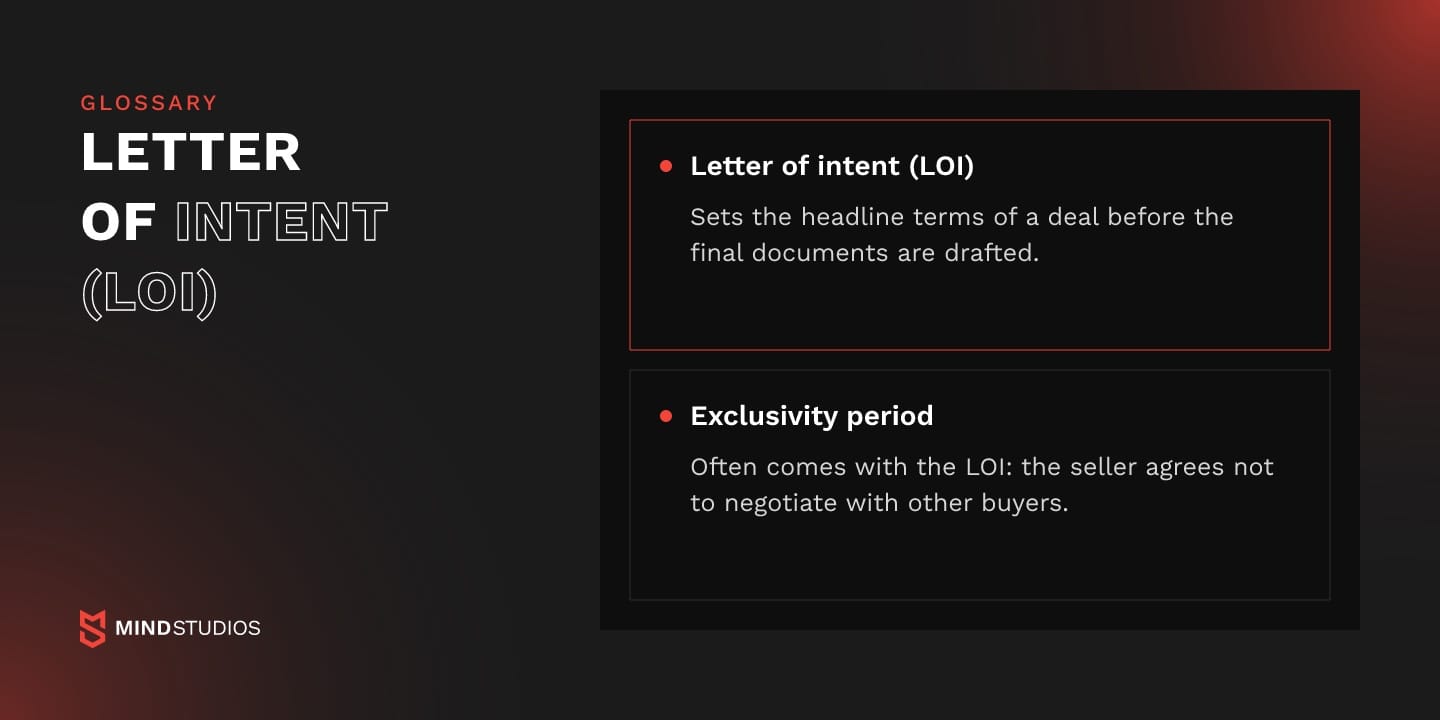
Before the LOI, your own risk assessment decides what to fix first. Once the review begins, the buyer's questions and the agreed timeline reshape those priorities.
What reviewers check: eight areas of technical due diligence
Reviewers check eight areas:
- architecture and scalability;
- code quality and maintainability;
- infrastructure and DevOps;
- security and compliance;
- data;
- IP and open source licenses;
- the team and key-person dependency;
- the roadmap together with the cost of technical debt.
In each area, the question that matters is what evidence backs up the team's answer.
Take a backup policy. It convinces a reviewer only when a restore test shows who ran it and how long it took. If you run that test before the review, you have time to fix whatever fails.
The eight areas and the evidence behind them
CI/CD, listed under infrastructure, is the automated pipeline that builds, tests and ships code. The table shows what each area covers and the proof reviewers usually ask for:
| Area | What reviewers check | Evidence requested |
|---|---|---|
| Architecture and scalability | Capacity for 10x load, bottlenecks, dependencies between components | Architecture and data-flow diagrams, load test results, scaling plan |
| Code quality and maintainability | Structure, test coverage, readability, outdated frameworks and dependencies | Read access to the repository, test reports, dependency list |
| Infrastructure and DevOps | Hosting, CI/CD, backups, disaster recovery | Infrastructure map, pipeline configuration, restore logs, incident history |
| Security and compliance | Vulnerabilities, access control, encryption, compliance frameworks | Penetration test reports, vulnerability scans, access policies |
| Data | Where data lives, who can reach it, quality, consent and retention | Data inventory, privacy notices, data processing agreements |
| IP and open source | Code ownership, licenses in the codebase, conflicts with the business model | IP agreements, software bill of materials |
| Team and key-person risk | Who knows which part of the system, how knowledge is documented | Org chart, system ownership map, runbooks |
| Roadmap and technical debt | Roadmap realism on the current system, cost of closing the debt | Debt register with estimates, roadmap with technical dependencies |
Security and IP need more context than a table row allows.
Security and compliance frameworks reviewers use
For web applications, the common reference is the OWASP Top 10, now in its 2025 edition, which ranks the most critical web application security risks.
If your US enterprise customers already ask about SOC 2, expect the review to ask too. SOC 2 is an AICPA attestation framework that reports on controls for security, availability, processing integrity, confidentiality or privacy. If you don't have a report yet, a documented inventory of your controls with a timeline still gives reviewers something concrete.
The European Commission explains that GDPR applies when you process personal data through an EU establishment. It also applies when you are based elsewhere and offer goods or services to people in the EU or monitor their behavior. Products serving the Gulf and other markets bring their own data protection laws into the same review.
Where GDPR applies, the review covers lawful basis, data subject rights and international transfers. For those infringements, Article 83(5) sets fines of up to €20 million or 4% of worldwide annual turnover, whichever is higher.
Every outside team that can reach your code and data adds to your attack surface, so those teams belong in the review as well. Mind Studios holds ISO 27001 certification for information security management. If a partner of yours holds a certificate like this, put it in the data room next to your record of who had access and when that access was removed.
Open source licenses and IP ownership
IP can stall a deal even when the product itself is technically sound. Reviewers want proof that the company holds the rights to code written by its employees, contractors and agencies, and that the open source licenses in the codebase fit the business.
Legal counsel then checks whether any component's obligations conflict with the way you sell and distribute the product. A software bill of materials (SBOM), which is a machine-readable list of components and their licenses, speeds this up. If you don't have an SBOM, settle during scoping how reviewers will inventory components and licenses, so your team can prepare the access they need.
The technical due diligence process, step by step
This guide organizes the technical due diligence process into six steps:
- Agree on scope and sign an NDA.
- Share documents and access.
- Review the code and infrastructure.
- Interview the team.
- Report the findings.
- Negotiate terms and a remediation plan.
Every step depends on the deal thesis, which is what the buyer plans to do with the product. An investor planning to triple US sales is likely to push on scalability and SOC 2 readiness. An acquirer folding your product into its platform will look harder at APIs, data models and identity.
Six steps of the technical due diligence process
- Scope and NDA. The reviewer and the company agree which products, environments and repositories are in scope and sign a nondisclosure agreement.
- Documents and access. The company opens a data room and grants read-only access to the repository, CI/CD and monitoring.
- Code and infrastructure review. Reviewers sample the codebase, run vulnerability and license scanners, and compare the live infrastructure with the diagrams.
- Team interviews. The CTO and key engineers walk through the architecture, past incidents and the roadmap. Reviewers check whether the answers match the documents and whether more than one person holds the knowledge.
- Findings and report. The reviewer ranks findings by risk and estimates what each fix would take.
- Negotiation and remediation plan. Findings feed into price, closing conditions and post-close plans, and both sides agree which fixes happen before closing.
Mind Studios' recommendation: Before the data room opens, ask an engineer outside the core team to set up a working environment using only the documents you plan to share. Wherever they get stuck, reviewers would ask about it in the interviews, and you still have time to answer in writing.
Red flags that change the terms of a deal
A technical due diligence finding can change deal terms when it threatens the buyer's plan or leaves a cost to cover after closing. Seven findings give a buyer a specific reason to revisit the terms.
Findings that move price or terms
- A single point of failure with no backup. If one server, database or cloud account has no redundancy, a single incident can take the business offline. A buyer may ask to see it fixed before closing.
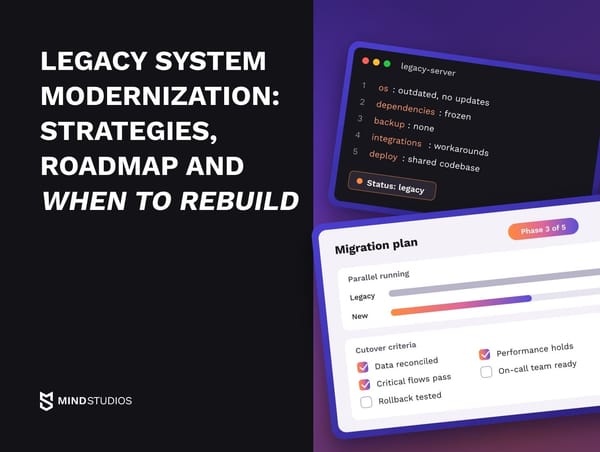
- A frozen stack. If the operating system or framework is too old to accept dependency updates, every release gets risky and the roadmap loses credibility. Fixes range from targeted upgrades to a full rebuild, and our guide to legacy modernization strategies covers how to choose.
- License conflicts in open source. A copyleft component in a distributed product can, depending on the license and how you ship, oblige you to disclose source code or cost money to replace.
- Exposed, unpatched vulnerabilities. The raw count matters less than which critical issues face the internet and how long they have been open.
- Knowledge held by one person. If only the founder or one senior engineer can deploy, debug production or explain the billing logic, the buyer inherits that dependency and may ask for retention terms.
- Debt that eats the roadmap. If most engineering time goes into keeping the system running, the growth plan is counting on capacity the team doesn't have.
- Architecture the team can't justify. If nobody can explain how a design choice supports the product, the review has to work out what that choice costs to run and change.
What the 2026 audit data shows
Audit data shows how often license and vulnerability questions come up. Black Duck's 2026 OSSRA report analyzed 947 codebases from audits run between November 2024 and October 2025, covering 197 M&A transactions:
- 98% of codebases contained open source.
- 68% had license conflicts.
- 87% had at least one vulnerability.
Almost every codebase uses open source, so reviewers care about whether its licenses and vulnerabilities are tracked. The figures describe the codebases Black Duck audited and can't predict yours. Still, they make a good case for having a current SBOM and a remediation list ready before reviewers ask.
Security findings also come with a cost benchmark: the IBM breach report puts the global average cost of a data breach at $4.99 million, up 12% on the previous year. That average sets the scale for the security discussion. Judging any single finding still takes evidence about the affected data, exposure and controls.
Mind Studios' insight: Trace each red flag to its root cause before you estimate the fix. In a frozen stack, the old operating system is often what stops dependencies (and their known vulnerabilities) from being patched, so one upgrade can close several findings at once.
If a frozen stack or a single server is holding your business back, you have to decide whether to fix it before the data room opens or disclose it with a costed plan.
How to prepare for technical due diligence before a round or exit
Preparing for technical due diligence starts before an investor asks for anything. Begin with an inventory of the systems and dependencies behind the deal's growth plan. With the gaps in view, the team can fix what would break the deal, document the risks that remain and rehearse the interviews with the engineers who will sit in them.
Four habits separate a smooth review from a stressful one:
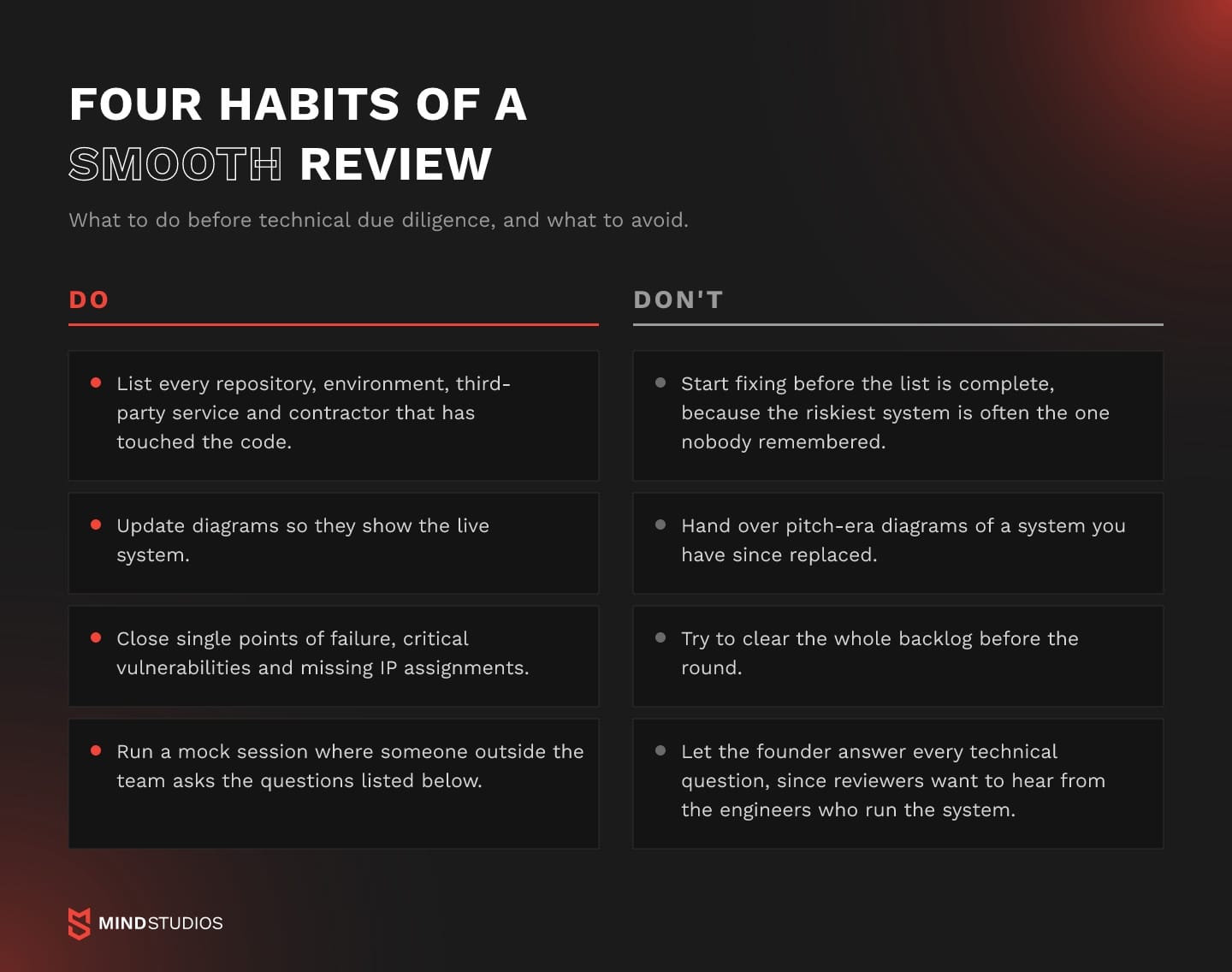
Anything you leave unfixed goes into a risk register, ranked by likelihood and impact.
What a credible debt disclosure looks like
A disclosure works when the reviewer can see the problem, its effect on the deal plan and the path to closing it in one place. The entry below is an illustration, and the estimate itself has to come from your own team:
- Issue: Billing runs on a framework version that is past end of support.
- Affected part of the plan: The move to annual enterprise contracts in the investor's growth case.
- Evidence: A dependency report and the list of affected modules.
- Options: Upgrade in place, or move billing into a separate service.
- Estimate: Engineer-weeks with a confidence range.
- Owner: CTO.
Written this way, a known weakness becomes a cost item the reviewer can check against their own estimate.
What to put in the technical data room
Each item below pairs a document or access with the evidence that makes it credible and the person who owns it.
System and access
Prepare system documentation and reviewer access:
- Architecture and data-flow diagrams. Evidence: dated diagrams checked against production. Owner: CTO.
- API documentation. Evidence: an OpenAPI specification generated from the code. Owner: backend lead.
- Infrastructure map. Evidence: cloud accounts, regions and environments, ideally exported from infrastructure-as-code. Owner: DevOps lead.
- Repository and CI/CD access. Evidence: read-only reviewer accounts with an expiry date, plus pipeline history. Owner: CTO.
Security, rights and data
Then add proof of protection and rights:
- Security reports. Evidence: the latest penetration test and scans, with remediation status. Owner: security lead or CTO.
- Open source inventory. Evidence: an SBOM with flagged licenses. Owner: engineering lead.
- IP agreements. Evidence: employment and contractor agreements with IP terms for everyone who wrote code, checked by legal counsel. Owner: CEO with legal counsel.
- Privacy documents. Evidence: data map, privacy policy and data processing agreements. Owner: data protection lead.
Operations, team and debt
Close with operations, people and debt:
- Logs and monitoring. Evidence: dashboards and an incident log with postmortems. Owner: DevOps lead.
- Team structure. Evidence: an org chart showing who owns each system. Owner: CTO.
- Technical debt register. Evidence: entries ranked by risk, in the disclosure format above. Owner: CTO.
Technical due diligence questions investors ask
Reviewers tailor their list to the deal, but a handful of technical due diligence questions come up in most reviews. If you answer them out loud before the interviews, you'll see where your documentation is thin.
The first four test the system and the team:
- What breaks first if traffic or customers grow tenfold?
- Who besides the original author can ship a release and roll it back?
- What happens if your main server, database or cloud account disappears tomorrow?
- Which parts of the roadmap depend on reworking the current system?
The rest cover what a buyer would inherit:
- Which open source licenses are in the code, and do any conflict with how you sell the product?
- Who owns the code written by contractors and former employees?
- Which critical vulnerabilities are open today, and how long have they been open?
- What would it take, in time and people, to close the technical debt you already know about?
Technical risks we have caught in live products
Most of the risks a technical due diligence review looks for exist long before any deal. A team that knows a live product well can catch them before they cause an outage.
How a long-term partnership surfaced a single point of failure
Our team has supported the MyMP3Pool platform for years. It is a US subscription service for DJs with a 40TB library of licensed music, and because we knew the system that well, we could see where its infrastructure was most exposed.
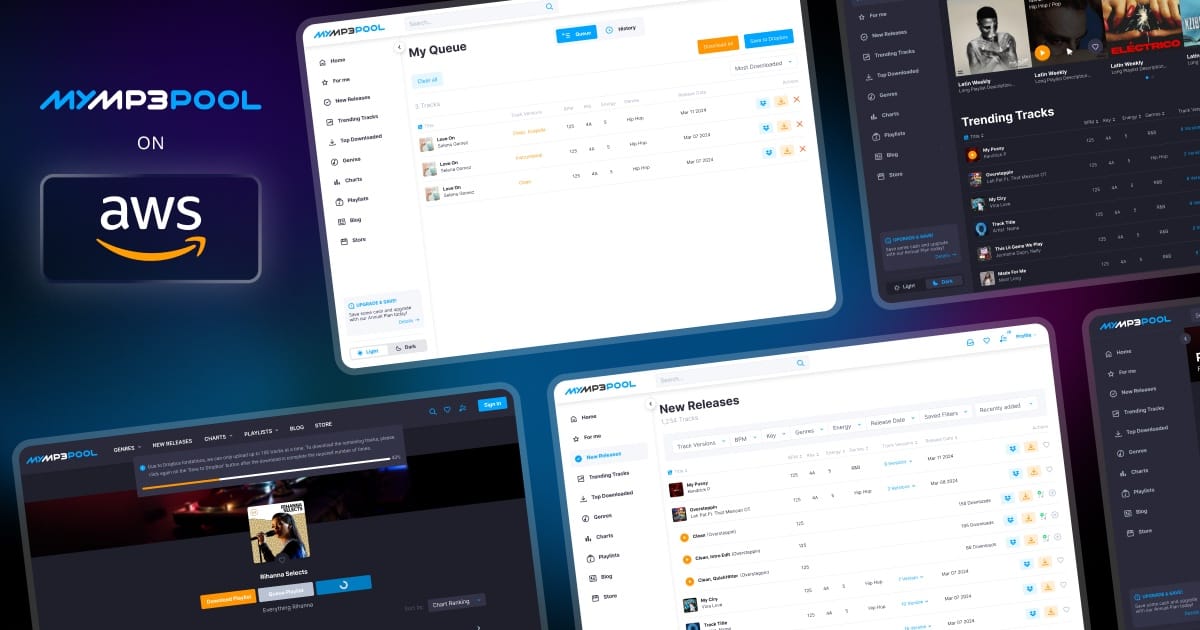
All content and user data lived on a single 40TB physical drive at a local US provider, with no redundancy and no backup. When we raised the issue, 38TB of it was already in use.
The Ubuntu version was also too old to support the platform's dependency updates, Node.js included. Development had been frozen as a result, and nothing new could be shipped safely.
Nobody had asked for a review. Our team brought the owner a formal infrastructure options report and recommended AWS for its US regions, S3 redundancy and the CloudFront CDN.
The migration ran in parallel, with no downtime during cutover, and the old environment stayed live for one month as a fallback. Once the CDN was in place, delivery costs came down 30%.
For a founder heading into a round, these are two red flags from the list above. When an outside reviewer finds them, they become negotiating points. When your own team finds and fixes them, they become a resolved risk described in the data room.
Why FITR chose to start over
The FITR coaching platform started from a different question. Its founder, Leon, came to us with CVLT, an existing app that had part of the functionality he wanted. At first he asked for help with updates and maintenance.
After we talked through every side of the idea together, Leon agreed to start anew and build a better version. A buyer faces the same fix-or-rebuild choice after a review. When the answer is less clear-cut, a structured software audit gives that decision the evidence it needs.
Dmytro Dobrytskyi, CEO at Mind Studios, explains what to agree on before anyone approves a rebuild:
When founders weigh fixing an existing app against starting over, the first question we put on the table is which parts of the next business stage the current product can carry. Agree on that list before anyone approves a rebuild, and keep whatever still works. The list becomes the rebuild's scope, one you can defend when an investor or buyer asks why you made the call.
Technical due diligence checklist for founders
This technical due diligence checklist turns the eight review areas into 14 conditions to check before a round or exit. It also works as a software due diligence checklist when you are the buyer. Each item names its evidence and its owner.
For delivery, the DORA metrics, such as change lead time, deployment frequency and change fail rate, give both sides a shared vocabulary. A trend tracked over months says more than any single number.
Architecture, code and delivery
Start with growth and safe releases:
| Condition | Evidence | Owner |
|---|---|---|
| Known scaling limits are documented | Load test results from a production-like environment showing where response times degrade | CTO |
| Frameworks and dependencies are on supported versions | A dependency report with end-of-life dates and an upgrade plan for anything past support | Engineering lead |
| Automated tests cover the critical paths (sign-up, payments, the core workflow) | CI reports showing these tests pass on every merge | QA lead |
| Delivery performance is measured | DORA metrics from the CI/CD pipeline, tracked over recent months | Engineering lead |
Infrastructure, security and data
Then check uptime and data protection:
| Condition | Evidence | Owner |
|---|---|---|
| Production has no unmanaged single point of failure | A failover test showing the service stayed up when a server, database or zone was taken out, plus a list of any single points you accepted and why | DevOps lead |
| Backups actually restore | A dated full restore from backup, run from the written runbook by someone other than the system's author, with its duration; after a failed test, a repeat run on the corrected runbook | DevOps lead |
| Production access is limited and reviewed | An access list with roles, enforced MFA and offboarding records with revocation dates | CTO |
| Critical vulnerabilities are closed or formally accepted | A recent scan or pentest and, for each open critical issue, an owner, a fix date, the mitigation in place and a signed record of who accepted the residual risk, why and when it will be reviewed | Security lead |
| Personal data is mapped | Storage locations, retention periods and lawful basis for each data set | Data protection lead |
IP, team and roadmap
Finally, confirm ownership, people and the plan:
| Condition | Evidence | Owner |
|---|---|---|
| The company holds the rights to its own code | Employment and contractor agreements with IP terms, matched against the repository's contributor list and checked by legal counsel | CEO with legal counsel |
| Open source licenses fit the business model | The SBOM, reviewed by legal counsel against how the product is sold and distributed | Engineering lead |
| Two or more named engineers can deploy and roll back each critical system | A recent deploy and rollback done from the runbook by each named engineer, without help from the pipeline's author | CTO |
| Technical debt is priced | Register entries in the disclosure format above, each with a risk level and an estimate | CTO |
| The roadmap fits the system | Each major feature mapped to the rework it requires | CEO and CTO |
What goes into a technical due diligence report and what happens next
A useful technical due diligence report has an executive summary, findings ranked by risk, a remediation plan with effort estimates and appendices with the raw evidence. Findings can then feed into deal terms: price adjustments, conditions before closing, warranties, escrow or a post-close integration plan.
How to check a single finding
A finding you can act on has the same parts as the debt disclosure entry above, plus two that the reviewer adds. Here they are for the billing example:
- Uncertainty: what the estimate assumes, such as the number of affected modules, and what could widen it.
- Verification: how both sides will confirm the fix, for example billing tests passing on a supported framework version and a fresh dependency scan.
If a finding lacks evidence or doesn't name the part of the plan it affects, ask the reviewer to add both before the report is final.
How findings turn into deal terms
How a finding shows up in the deal depends on how much it matters to the deal thesis and on how the deal is structured. Treat the rows below as possible scenarios to discuss with your lawyer and deal advisor:
| Finding level | Why this level | Possible terms |
|---|---|---|
| Critical | Revenue or ownership at risk now | A fix or IP assignment before closing, or a price discussion |
| High | Material legal or security exposure | A specific warranty or indemnity, possible escrow |
| Medium | Slows the growth plan | Remediation in the post-close plan, retention terms for key people |
| Low | Friction without blocking the plan | A note in the integration plan |
Examples for each level:
- Critical: production on one server with no backup, or code still owned by a former contractor.
- High: a copyleft license whose obligations counsel confirms conflict with how the product is distributed, or an exposed critical vulnerability.
- Medium: an outdated framework under roadmap features.
- Low: thin documentation in a module the roadmap doesn't touch.
The same issue can land in different rows. Thin documentation is a low risk in a stable module and a high risk in the billing system the buyer plans to rebuild.
In some deals, a high finding leads to escrow: a third party holds part of the price until an agreed condition is met. If you have a verified fix, your deal advisor can use it as evidence when that condition comes up.
Fixes agreed as conditions to closing have to be done before the deal closes, and the rest of the remediation plan runs after it, as the deal documents set out. The post-close plan can include software modernization work, such as upgrading the stack or removing single points of failure. Each task should keep the owner and acceptance criteria agreed during the review.
Who should run the review: the investor's team, your own pre-audit or your development partner
Three roles can share the work: the reviewer the investor or buyer appoints, an independent pre-audit you commission and your development partner. When an investor or buyer runs technical due diligence, they choose who does it, so confirm in the scope discussion who will run it and what deadline applies.
Each role covers a different part of the job:
- The investor's or buyer's reviewer. Their tech due diligence supports their own decision. Your part is an organized data room, fast access and engineers who are available for interviews.
- Your own pre-audit. An independent review well before the LOI lets you fix critical findings before anyone negotiates over them.
- Your development partner. A team that builds or maintains the product can use its knowledge of the system to investigate findings and plan fixes, and its estimates should flag dependencies that could delay the work. It isn't independent, so its role is preparation and remediation.
If the pre-audit raises architecture questions, such as whether to split a monolith or move to different cloud regions, an architecture review gives you a reasoned plan before the investor's team asks.
What drives the scope of the review
How much work the technical due diligence process involves depends on the size and age of the system, the number of products and codebases, regulatory exposure such as health or payment data, and how quickly the company grants access. Assigning data room owners early also brings out documents or permissions that still depend on contractors or other teams.
The question from the start of this guide still applies: Can your technology carry the plan someone is about to pay for? Founders who have prepared evidence and owners can explain known risks when the review begins. They also have a basis for judging the findings they didn't see coming.
If a round or exit is ahead, a pre-audit or architecture review shows what the investor's team is likely to find while you still have time to fix it.
FAQ
What is the meaning of technical due diligence?
Due diligence is the investigation a careful investor or buyer does before committing money. Technical due diligence applies that investigation to the product itself. For a founder, it ends in a list of findings with estimates, and each one can be priced, accepted or written into the deal as a fix.
What is the difference between CDD and VDD?
The two terms sort reviews in different ways. CDD, or commercial due diligence, is named for its subject: the market, customers and competitive position. VDD, or vendor due diligence, is named for who orders it. Deloitte's diligence page describes it as work a seller commissions on its own business before a sale, so prospective investors get reliable information.
What are the main types of due diligence?
The four main types are:
- Financial: revenue quality, costs, cash flow and forecasts.
- Legal: contracts, corporate structure, litigation and IP ownership.
- Commercial: market, customers and competition.
- Technical: product, code, infrastructure, security and team.
How long does technical due diligence take?
There's no standard length for technical due diligence. It depends on the agreed scope and on how fast your side responds. Baker McKenzie notes that exclusivity commonly runs 30–60 days after the LOI, so work backward from any review deadline and ask your lawyer how it relates to exclusivity. Delays you can prevent include:
- slow or partial access to repositories and cloud accounts;
- contractors who still have to sign IP documents;
- answers that contradict the documents and trigger follow-up rounds.
What is the difference between technical due diligence and financial due diligence?
Financial due diligence tests whether the numbers are real. Technical due diligence tests whether the product behind them can keep producing them at the scale the buyer expects. The two meet in the forecast: a rebuild or security fix from the technical findings becomes a cost line in the financial model.
Are technology due diligence, IT due diligence and software due diligence the same thing?
Mostly, yes. Technology due diligence and tech due diligence are the broad labels. Software due diligence focuses on the codebase and licenses, while IT due diligence can extend to internal systems such as networks and corporate tools. The reviewer's scope list shows what will actually be covered.
What does M&A technical due diligence add for a buyer?
M&A technical due diligence adds the integration question. On top of the risks inside the target, the buyer's reviewers can estimate:
- how the target's data model and APIs fit the buyer's systems;
- whether user accounts and authentication can be merged;
- what it costs to bring hosting, tooling and security controls up to the buyer's standards;
- which engineers need to stay through the transition.
What is included in a technical due diligence report?
The report follows the scope agreed at the start, so its sections mirror the areas in scope, from the overall verdict to appendices such as scan outputs and interview notes. When you read a draft, check three things: every area in scope has a section, each critical finding has evidence attached and every estimate states its assumptions.