
 ChatGPT
 Perplexity

Our article explores 2026’s top real estate challenges and solutions, covering rising costs, ESG compliance, digital transformation, automation, and market adaptation.
Highlights:
- New ESG regulations are pushing businesses to adopt greener operations while balancing compliance costs.
- Lease management without digital integration leads to missed renewals and revenue loss.
- Tenant expectations for smart buildings are accelerating investments in advanced building systems.
A property manager loses a prospect to a competitor. Not because of location, price, or amenities, but simply because the competitor responded to the inquiry in 90 seconds while they were still checking their voicemail. By the time they called back three hours later, the prospect had already scheduled a tour and submitted an application elsewhere.
This isn't a service problem. It's a systems problem. In 2026, the gap between tech-enabled operators and traditional players is becoming impossible to close.
According to Deloitte's 2025 outlook, commercial real estate firms face an average 15–20% increase in compliance and operational costs, while properties without smart building features see 25% longer vacancy periods.
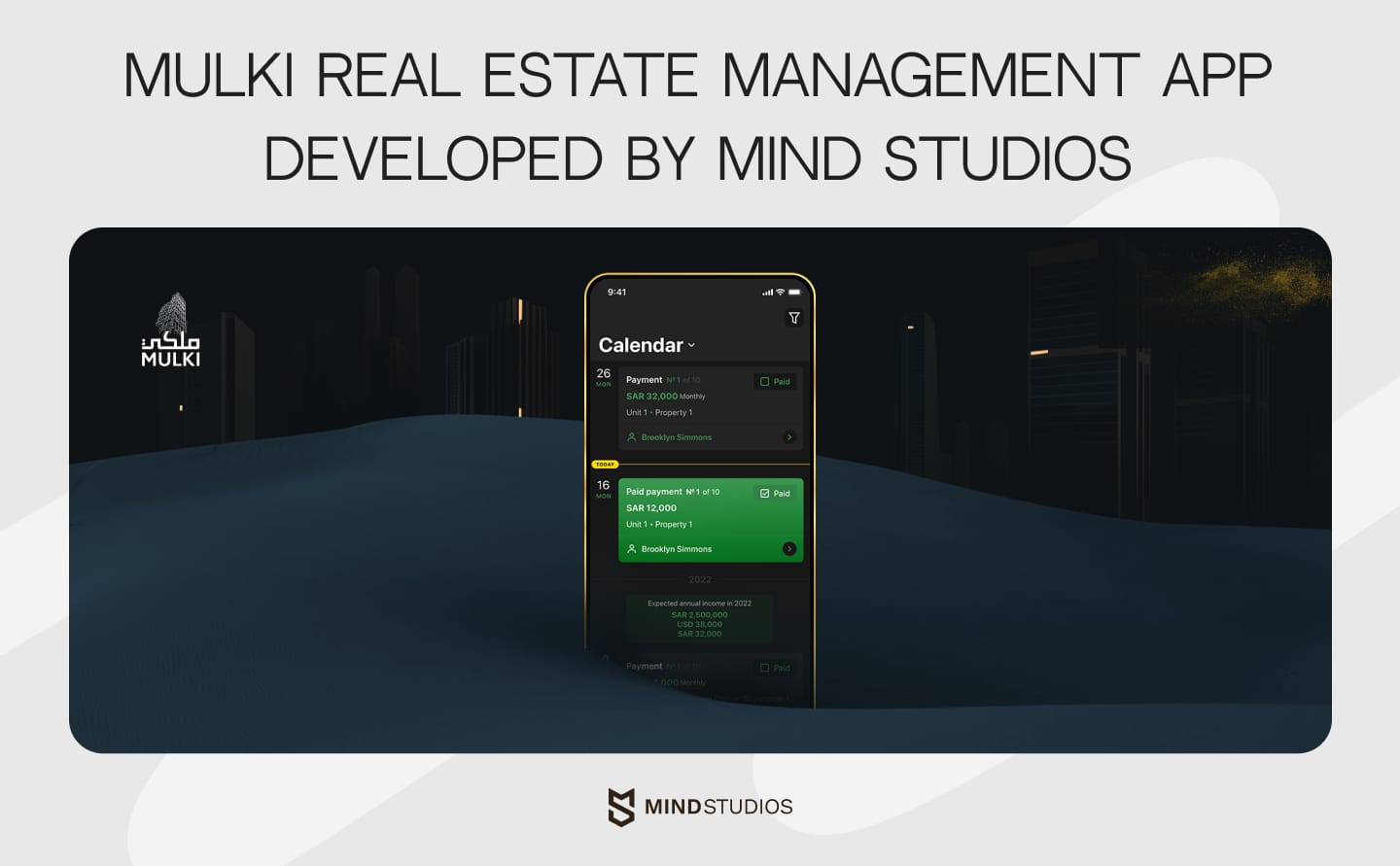
At Mind Studios, we've spent over 10 years building real estate software solutions that solve these challenges. For example, in Mulki, we streamlined leasing workflows and automated tenant communication.
Want to know which of these challenges is costing you the most money? Book a free 45-minute operational diagnostic where our team analyzes your specific workflows and shows you exactly where technology delivers fastest ROI.
Why are real estate companies falling behind in 2026?
The real estate market has changed significantly over the past few years. Rising costs, new regulations, and shifting tenant expectations are creating pressure from multiple directions.
Most businesses treat these as separate problems. But they share a common root cause: operational systems built for manual coordination rather than automated intelligence.
Fixing issues one by one creates a whack-a-mole effect. Automate expense tracking, and lease renewals still fall through the cracks. Add tenant portals, but pricing decisions rely on outdated data. Each solution helps temporarily, but disconnected systems keep generating new issues.
Let's look at the six main challenges confronting real estate in 2026 and how integrated systems address them as connected problems, not isolated fixes.
Challenge #1: Economic pressure
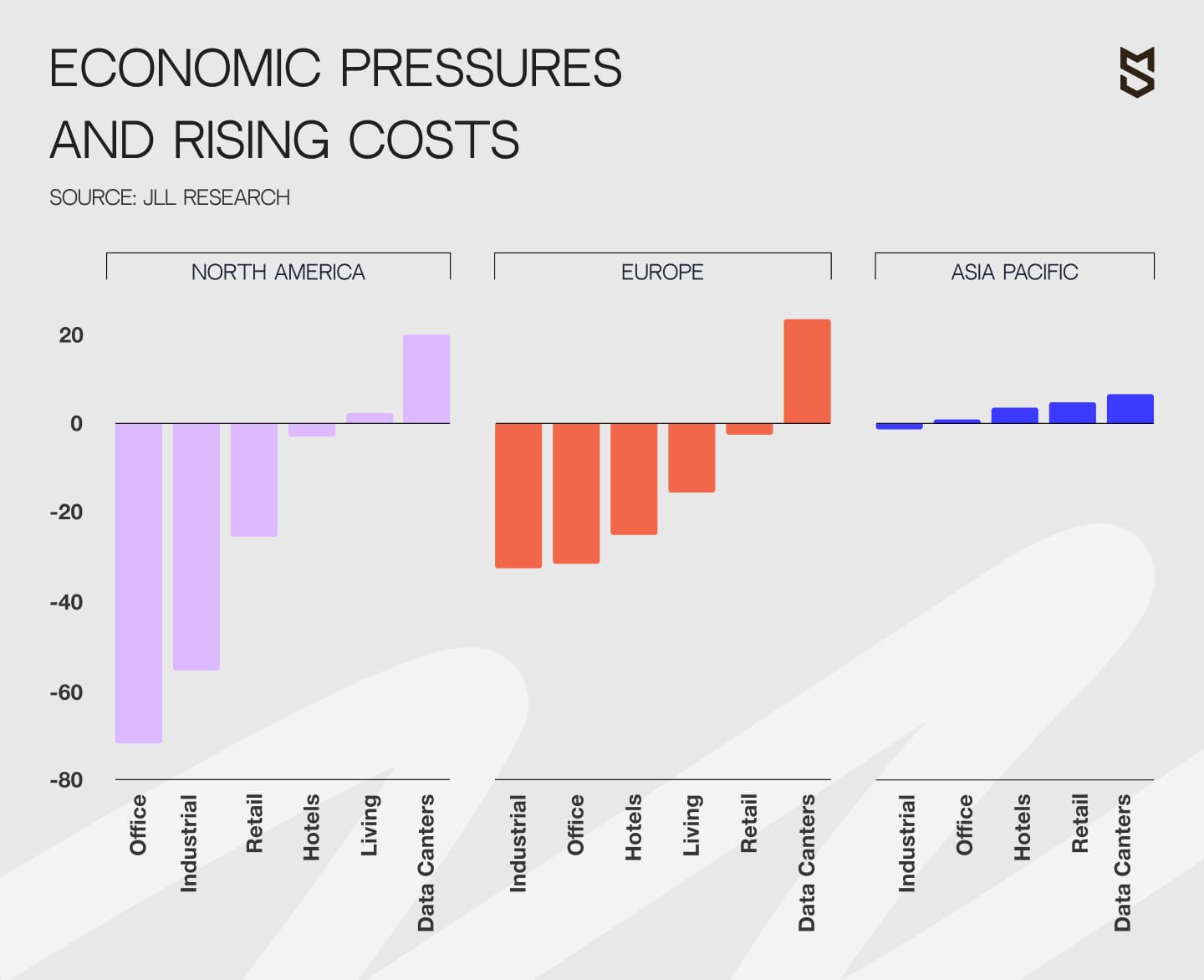
Property insurance premiums are projected to increase in 2026, while energy costs remain unpredictable due to supply chain disruptions and geopolitical tensions. Labor market tightness is pushing maintenance and property management salaries up by 8–11%. These aren't temporary spikes but the new baseline for 2026 operational costs.
Here's where manual cost management fails: Rising costs go undetected for weeks because expense tracking happens in disconnected spreadsheets.
By the time the budget overruns the surface, properties are already 15–20% over target. Management makes emergency cuts to service quality: slower maintenance response times, reduced cleaning schedules, delayed repairs. Tenant satisfaction drops. Complaints increase. Lease renewals decrease. Vacancy rates climb. The cost of filling those vacant units eliminates any savings from the original cuts.
This cycle repeats until businesses either implement real-time cost intelligence or lose competitiveness to operators who already have it.
How to prevent budget overruns before they happen
Cost reduction requires two capabilities: visibility (knowing where money goes) and control (preventing unnecessary spending).
Most property managers have tracking tools but lack optimization systems. Tracking shows you overspent last month; optimization prevents overspending this month. The difference determines profitability.
Here's what integrated cost management delivers:
- Cost-optimization platforms. Real-time expense monitoring that flags anomalies and blocks out-of-policy spending before it happens, giving managers budget control instead of historical reports.
- Predictive maintenance systems. AI forecasts equipment failures and schedules preventive work during optimal windows, cutting emergency repair costs by 40–60% while extending asset lifespan.
- Energy management automation. Smart systems adjust climate and lighting based on actual occupancy and time-of-use rates, reducing utility bills by 20–30% without impacting tenant comfort.
- Vendor performance analytics. Automated tracking of response times, quality metrics, and pricing trends that identify underperformers and recommend better alternatives.
- Self-service tenant portals. Automated rent payments, lease renewals, and maintenance requests that reduce administrative work by 40–50%.
- Dynamic pricing optimization. AI models adjust lease rates based on market demand, occupancy levels, and local competition without manual intervention.
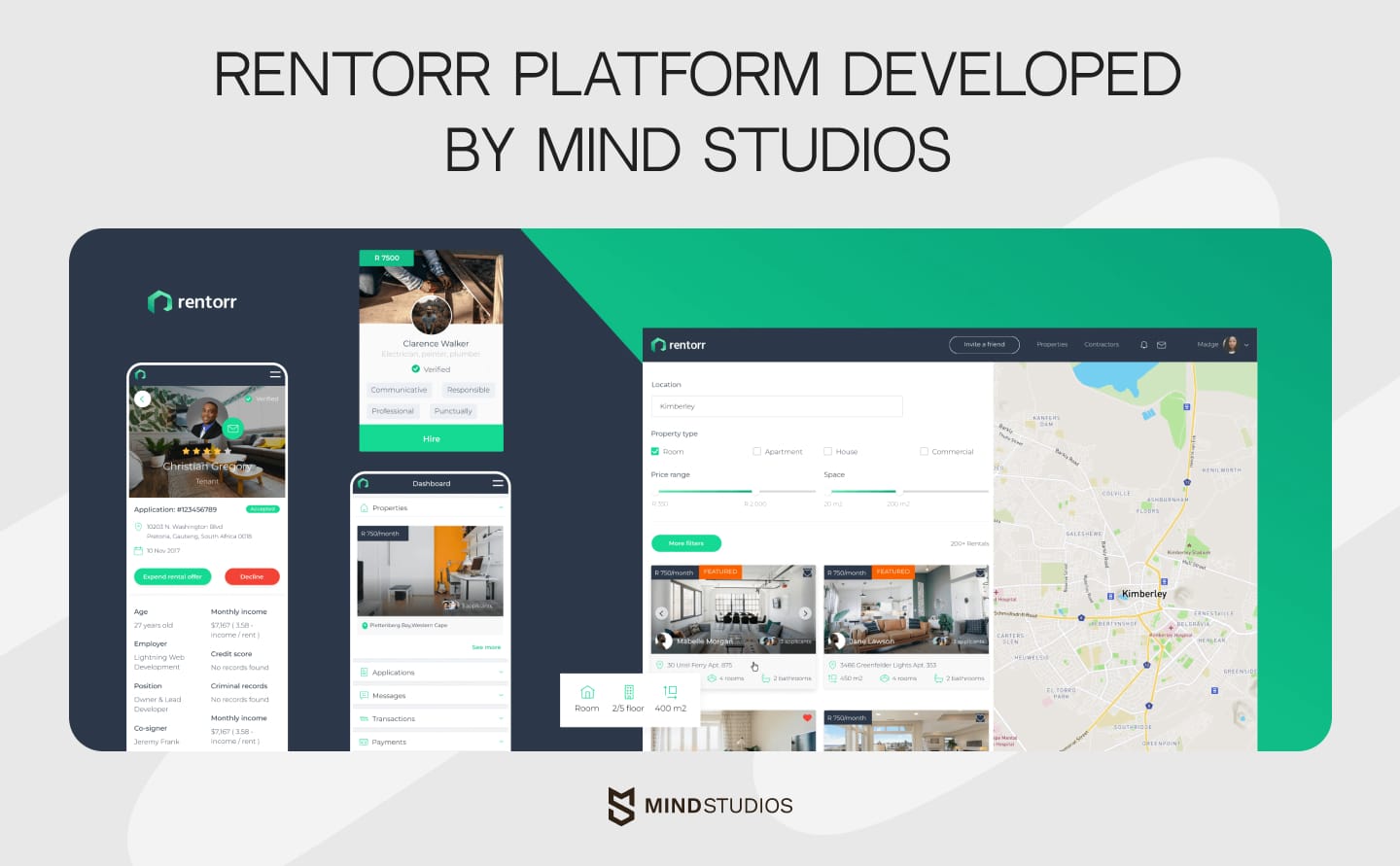
Mind Studios’ insight: Most property managers think they need "better expense tracking" when what they actually need is expense prediction and automated response. In our Rentorr project, we didn't just build a system to record costs, we built predictive models that warned managers about budget risks 3–4 weeks in advance and automatically adjusted non-critical spending to keep properties within target margins.
While rising costs pressure margins, the next challenge determines whether you can access financing at all.
Challenge #2: Sustainability
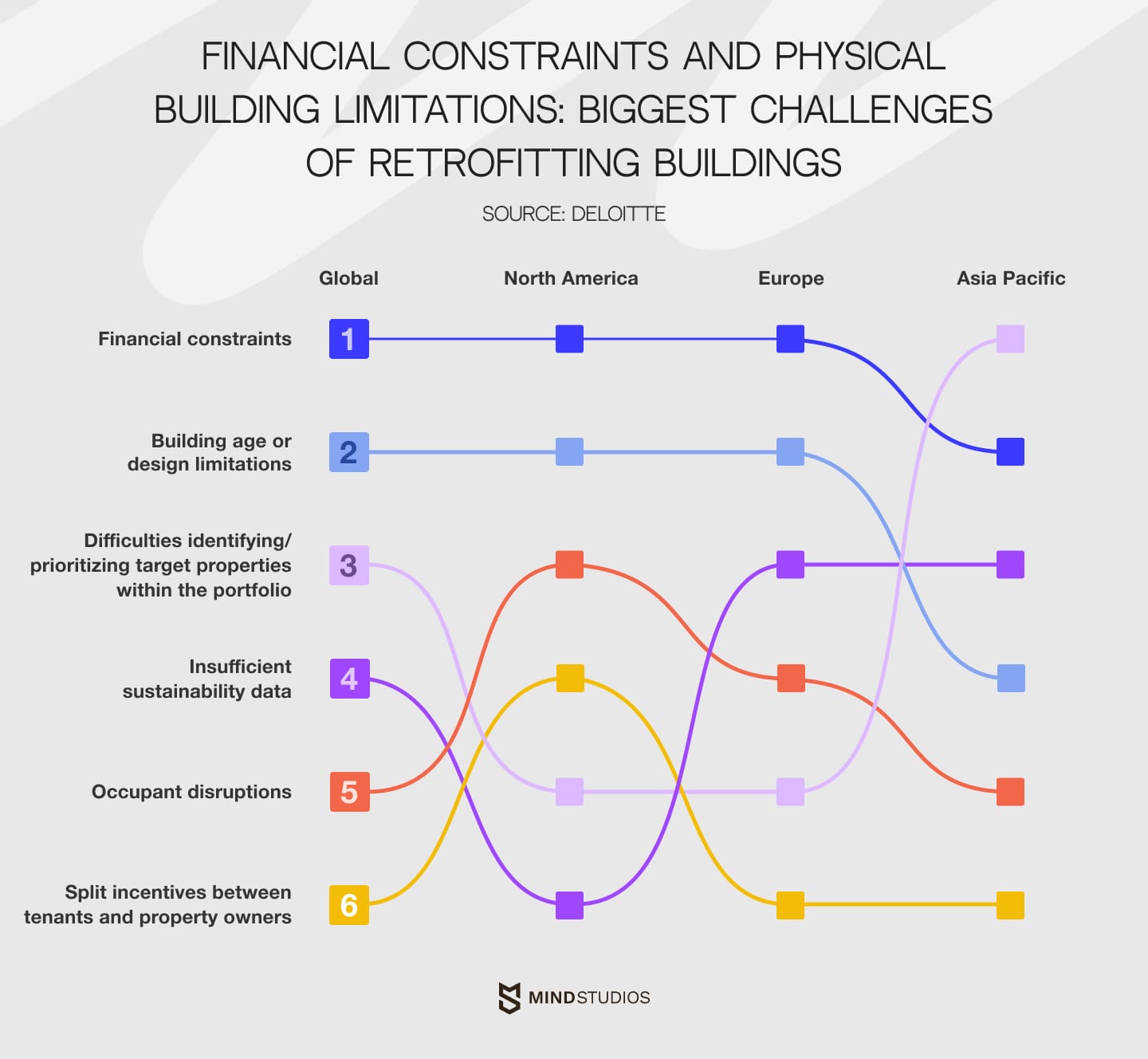
In 2026, ESG compliance isn't just an investor preference — it's becoming a financing requirement. The EU's Energy Performance of Buildings Directive mandates zero-emission new buildings by 2030, with retrofit deadlines for existing properties starting in 2027. SEC climate disclosure rules require publicly traded real estate companies to report verified emissions data by fiscal year 2026.
Over 80% of major investors now require detailed ESG metrics before committing funds. Properties that fail green building standards see up to 25% lower valuations compared to certified sustainable buildings. Banks are tightening lending, with some refusing financing for properties without clear energy efficiency plans.
Non-compliance creates a compound problem: higher operational costs, reduced property values, limited financing, and lower tenant interest. Each factor reinforces the others.
Here's what businesses face if they don't meet evolving ESG standards:
| What's changing in 2026 | Business impact | Timeline to act | Cost of waiting |
|---|---|---|---|
| Tougher ESG laws in major markets | Higher compliance costs → 15-20% expense increase | 6–12 months before major enforcement | $50–200K per property (on 50-unit portfolio = $2.5M–10M) |
| Rising energy costs penalize inefficient buildings | Inefficient management → 20-30% higher utility expenses | Immediate (costs compound monthly) | $15–40K annual loss per property in excess utility costs |
| Investor/tenant preference shifts to green buildings | Lower occupancy → diminished returns | 3–6 months to implement certification | 10–15% occupancy decline equals $100–300K annual revenue loss |
| Outdated infrastructure without upgrades | Financing access restricted | 12–18 months to complete major upgrades | $500K–2M valuation loss on mid-sized commercial property |
From compliance reporting to compliance-by-design
The difference between compliance monitoring, automation, and prevention determines whether your team spends time reporting problems or preventing them.
Most companies stop at monitoring, some reach automation, but only compliance-by-design scales across large portfolios without proportional staff increases.
Compliance monitoring (reactive approach) |
Compliance automation (proactive approach) |
Compliance-by-design (preventive architecture) |
|---|---|---|
Tracks energy waste after it occurs. Useful for reports and identifying problems, but doesn't prevent violations or optimize in real-time. Manual review required: works for 5–10 properties but fails at scale. |
Flags upcoming deadlines, consolidates property data, and auto-generates SEC/EU-formatted reports. Eliminates spreadsheet work and reduces errors, but still requires staff to act on alerts and implement changes. |
Blocks non-compliant actions structurally. Smart HVAC auto-optimizes within mandates based on occupancy/weather. Maintenance workflows enforce sustainability protocols—technicians must document energy-efficient parts. Procurement rejects non-ESG vendors. Architecture prevents violations rather than detecting them. |
This third approach is the only one that scales. A 50-property portfolio using compliance monitoring needs 3–5 dedicated compliance staff. The same portfolio with compliance-by-design needs 1 oversight manager because the system handles enforcement automatically.
Mind Studios’ insight: The businesses that handle ESG regulations most effectively have one thing in common: energy data flows automatically into investor reports and regulatory filings. Manual compliance tracking is expensive and error-prone. Automated systems collect, organize, and format data without staff intervention, reducing both costs and compliance risk. In our experience, proving compliance efficiently matters as much as achieving it.
ESG compliance creates data requirements. The next challenge is choosing which technology actually delivers that data efficiently.
Challenge #3: Digital transformation
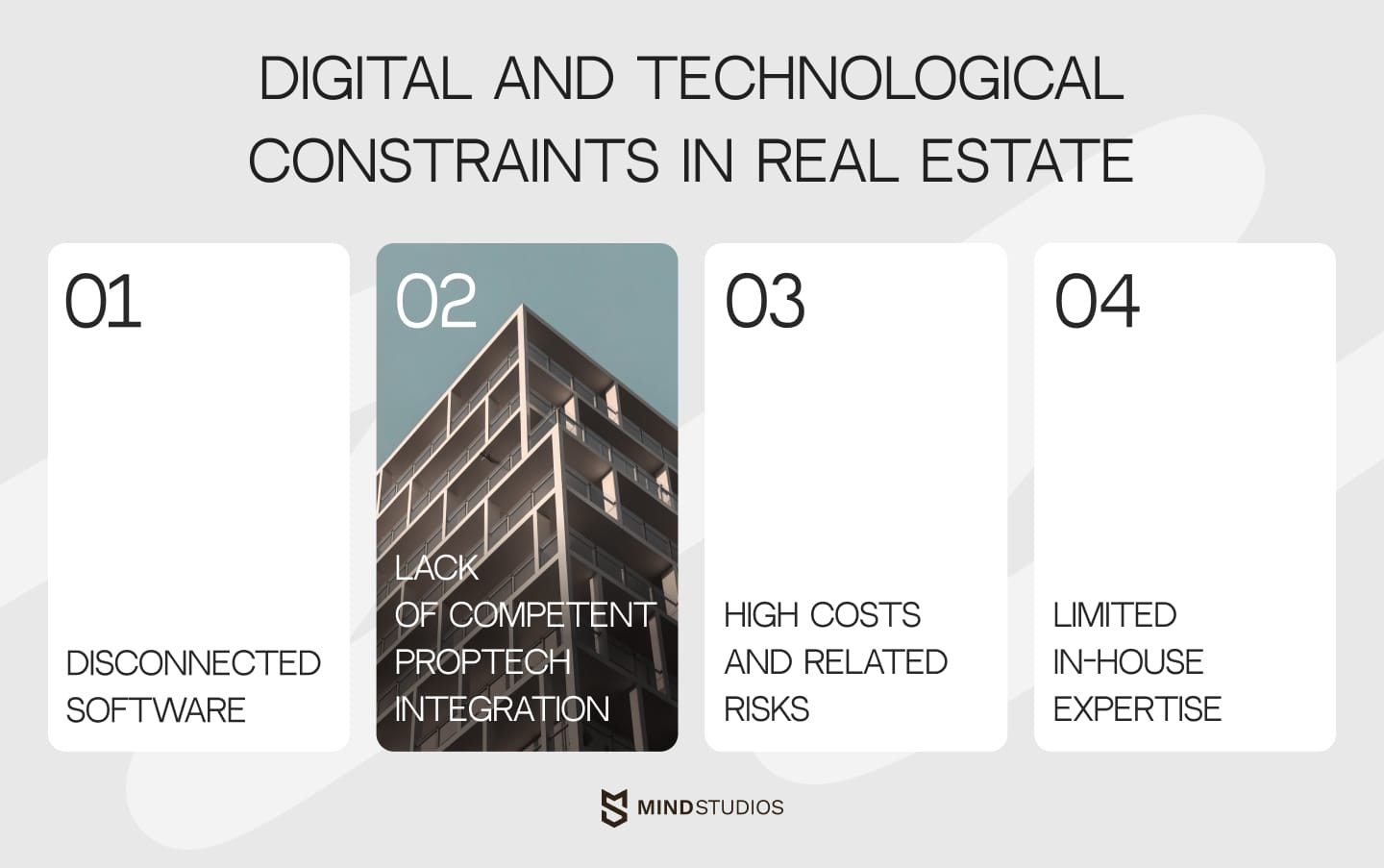
The real estate tech market now offers over 8,000 PropTech solutions. Sounds like progress, but it creates a different problem: decision paralysis. Property managers face dozens of options for tenant portals, multiple competing platforms for maintenance tracking, and conflicting advice about which AI tools actually deliver ROI.
Most companies respond by either doing nothing (staying with manual processes because choosing feels too risky) or buying multiple point solutions that don't integrate (creating new inefficiencies instead of solving old ones).
Both approaches lead to the same outcome: competitors with integrated systems pull further ahead while your team drowns in disconnected tools or outdated workflows.
Understanding the trade-offs: integration complexity vs. flexibility vs. customization
Approach 1: Point solutions
Buy best-of-breed tools for each function (leasing, maintenance, accounting, tenant communication). Looks appealing because you get top-rated software for every need.
Why it fails: Integration complexity explodes as you add tools. Data sits in separate systems. Staff waste time manually transferring information between platforms. Subscription costs spiral as you add more tools to fill gaps. A 50-unit property portfolio can easily end up paying $3,000–5,000 monthly across 8–12 disconnected subscriptions.
Approach 2: Enterprise platforms
Implement one comprehensive off-the-shelf system that handles everything. Seems efficient because it's "all in one place."
Why it fails: Your operations have to change to match what the software does, not the other way around. Need a custom lease structure? That's expensive customization or manual workarounds. Want to add a new property type? Hope the platform supports it. You're locked into the vendor's roadmap, pricing changes, and update schedule.
Approach 3: Custom platform architecture
Build an integrated system around your actual operations, connecting the tools you need in ways that match how your team works.
When this succeeds: Your business model is unique enough that forcing it into standard software creates inefficiencies. You're managing 100+ units where operational improvements generate significant ROI. You're growing and need systems that adapt to new property types, markets, or business models without vendor approval.
The right choice depends on your portfolio size, operational complexity, and growth plans. At Mind Studios, we help clients evaluate all three approaches honestly. Sometimes the answer is to integrate existing platforms better. Sometimes it's custom development. We recommend what actually fits your situation, not what maximizes our project scope.
Below are the reasons why digital transformation matters in 2026:
What is happening in 2026 |
Business impact |
|---|---|
Disconnected software limits efficiency |
Staff manually transfer data between systems → 2-3 hours daily wasted per property manager |
PropTech investments exceed $32B, yet 60% struggle with implementation |
Miss real-time insights → delayed decisions cost deals |
High costs make tech upgrades feel risky |
Outdated systems create bigger long-term inefficiencies and competitive gaps |
Limited in-house expertise slows adoption |
Outdated tenant experience → 15-25% lower retention rates |
Technology decision matrix: Which solution fits your portfolio size?
1. IoT-powered property management
- Best for: Multi-property portfolios (20+ units) where energy costs and maintenance expenses significantly impact margins.
- Implementation complexity: Medium to high. Requires hardware installation (sensors, smart thermostats, connected HVAC systems), network infrastructure upgrades, and integration with existing management software.
- When to prioritize: Your maintenance costs are unpredictable, emergency repairs frequently blow budgets, or energy expenses exceed 25% of operating costs.
Mind Studios’ approach: We start with high-impact areas (HVAC and water systems in the top 3 cost-heavy properties), prove ROI with measurable savings, then scale across the portfolio. This avoids expensive full-deployment failures.
2. AI-driven analytics for smarter decisions
- Best for: Property managers making frequent pricing, leasing, or investment decisions where small improvements in accuracy generate significant revenue.
- Implementation complexity: Low to medium. Works with existing data if you have 12+ months of historical leasing, occupancy, and market data. No hardware required.
- When to prioritize: You're competing in dynamic markets where rental rates fluctuate frequently, vacancy periods vary significantly by season, or you're expanding into new markets and need data-driven entry strategies.
Mind Studios’ approach: We build predictive models using your historical data, validate accuracy over 2–3 months, then gradually increase automation as the system proves reliable. Managers maintain override control during the learning phase.
3. Cloud-based platforms for seamless operations
- Best for: Growing businesses managing multiple property types or entering new markets where operational consistency matters more than customization.
- Implementation complexity: Low. Fastest to implement, lowest upfront cost, works well for standardized operations.
- When to prioritize: Your team wastes time on manual data entry, you struggle with version control on contracts and documents, or remote property management creates communication delays.
Technology decisions should follow operational priorities, not trends. In our experience, the most successful implementations start with the problem that's costing you the most money right now, not the flashiest technology. If maintenance emergencies are your biggest expense, start with IoT sensors. If vacancy periods are too long, start with AI pricing optimization. If administrative overhead is killing productivity, start with cloud-based workflow automation.
— says Dmytro Dobrytskyi, CEO at Mind Studios.
Overwhelmed by PropTech options? Book a free technology strategy session where we'll help you identify which approach actually solves your specific operational challenges.
Let’s explore tech
solutions
Get our expertise

Technology enables faster operations. But the next challenge shows why speed matters: tenant expectations have fundamentally changed.
Challenge #4: Customer expectations
Today, properties with online leasing capabilities convert inquiries to tours at 40% higher rates than those requiring phone calls or in-person visits. Properties offering virtual tours see 35% shorter vacancy periods.
The speed and convenience gap between digital-first and traditional properties isn't just user experience — it's directly impacting your leasing velocity and revenue.
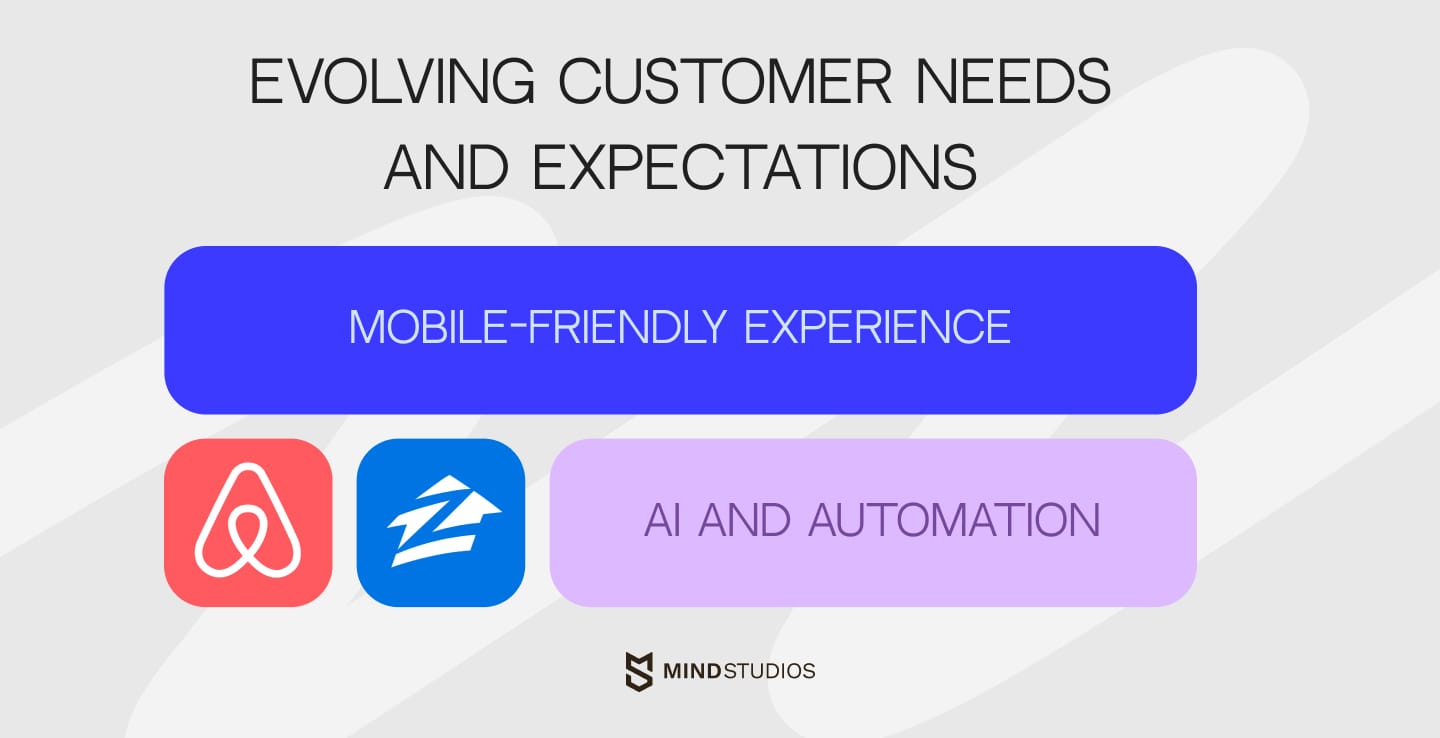
Millennials and Gen Z represent over 65% of rental demand. Their expectations aren't preferences you can choose to accommodate, but entry requirements. This means that properties without mobile-friendly applications, instant communication, and digital lease signing don't make it onto consideration lists. You're not competing on amenities or location anymore if your leasing process feels like 2015.
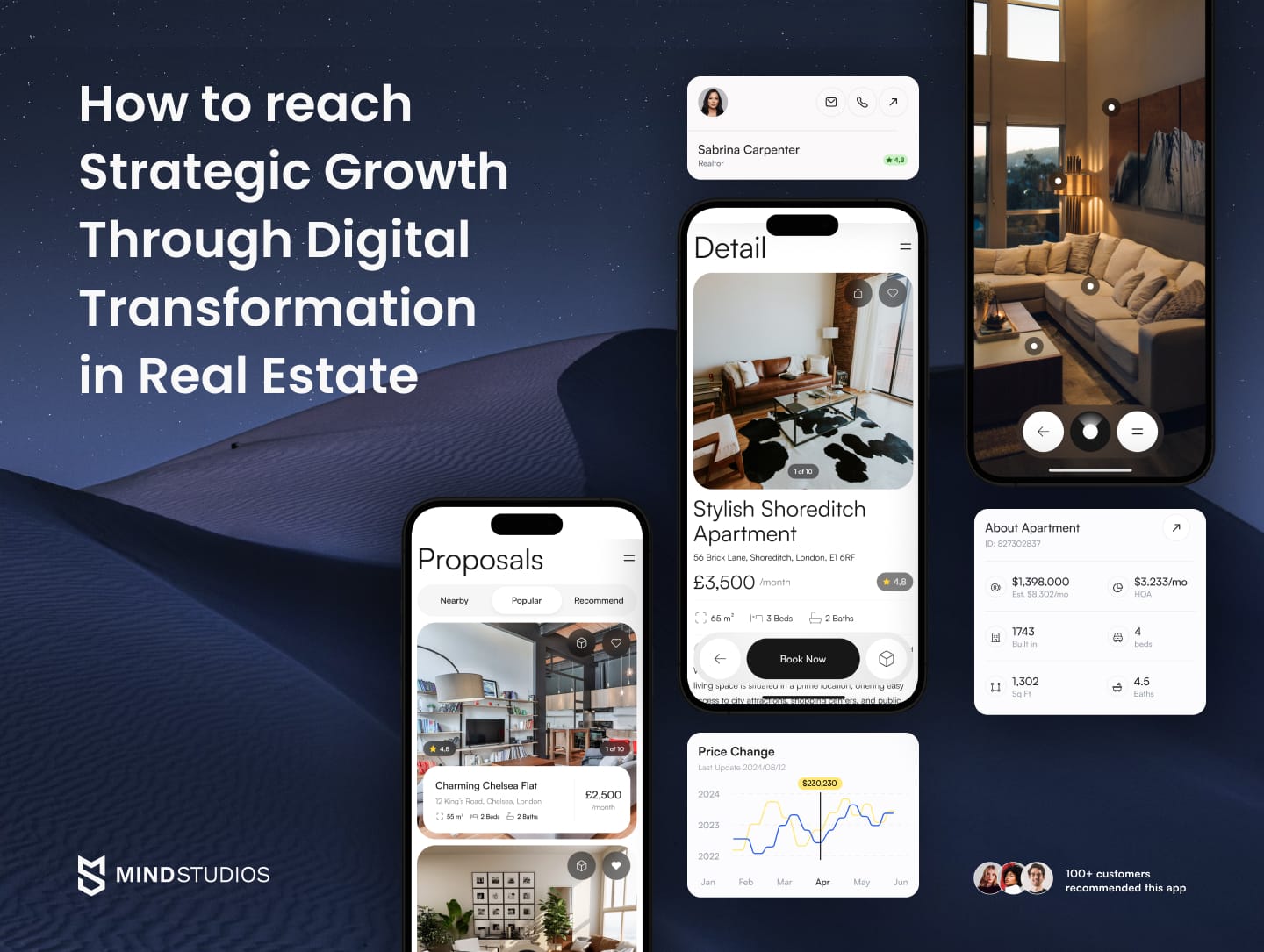
Real estate customers expect speed, convenience, and digital accessibility like never before. They want to browse properties, book tours, and sign leases online without delays or paperwork. Companies relying on outdated systems face longer leasing cycles, missed opportunities, and declining conversion rates.
Here's what happens when digital experience lags behind expectations:
| What is happening in 2026 | What this means for businesses | Cost of poor experience |
|---|---|---|
| Millennials and Gen Z expect instant, mobile-friendly experiences | Outdated websites eliminate your property from consideration before prospects contact you | 15–20 day longer time-to-lease = $2,000–4,000 lost rent per unit |
| Platforms like Airbnb and Zillow set convenience standards | Without seamless digital experiences, lose customers to tech-enabled competitors | 30–40% lower inquiry-to-tour conversion = wasted marketing spend |
| AI and automation redefine service expectations | Manual processes create delays → competitors close 30–40% faster | Each lost prospect costs $500–800 in marketing and replacement time |
| Renters expect instant responses and personalized recommendations | Without AI-powered tools, prospects move to next listing while you check voicemail | Slow response times → 25% higher bounce rates from listing sites |
Digital convenience gets prospects interested. The next challenge is having inventory available when they're ready to commit.
Challenge #5: Inventory management
A vacant unit sitting empty for 30 days instead of 15 isn't just delayed revenue — it's permanent revenue loss you can never recover. That's $2,500–4,000 per unit that disappears from annual performance, compounded across every property in your portfolio. A 50-unit portfolio with just 5 days of excess vacancy per unit loses $60,000–95,000 annually to inefficient inventory management.
In 2026, this inefficiency becomes competitively fatal. Institutional operators like Blackstone and Greystar are deploying AI-powered revenue management systems that adjust pricing hourly based on market demand, optimize unit mix in real-time, and predict tenant turnover 60–90 days in advance. They're filling units faster and at higher rates than companies still managing inventory through spreadsheets and quarterly pricing reviews.
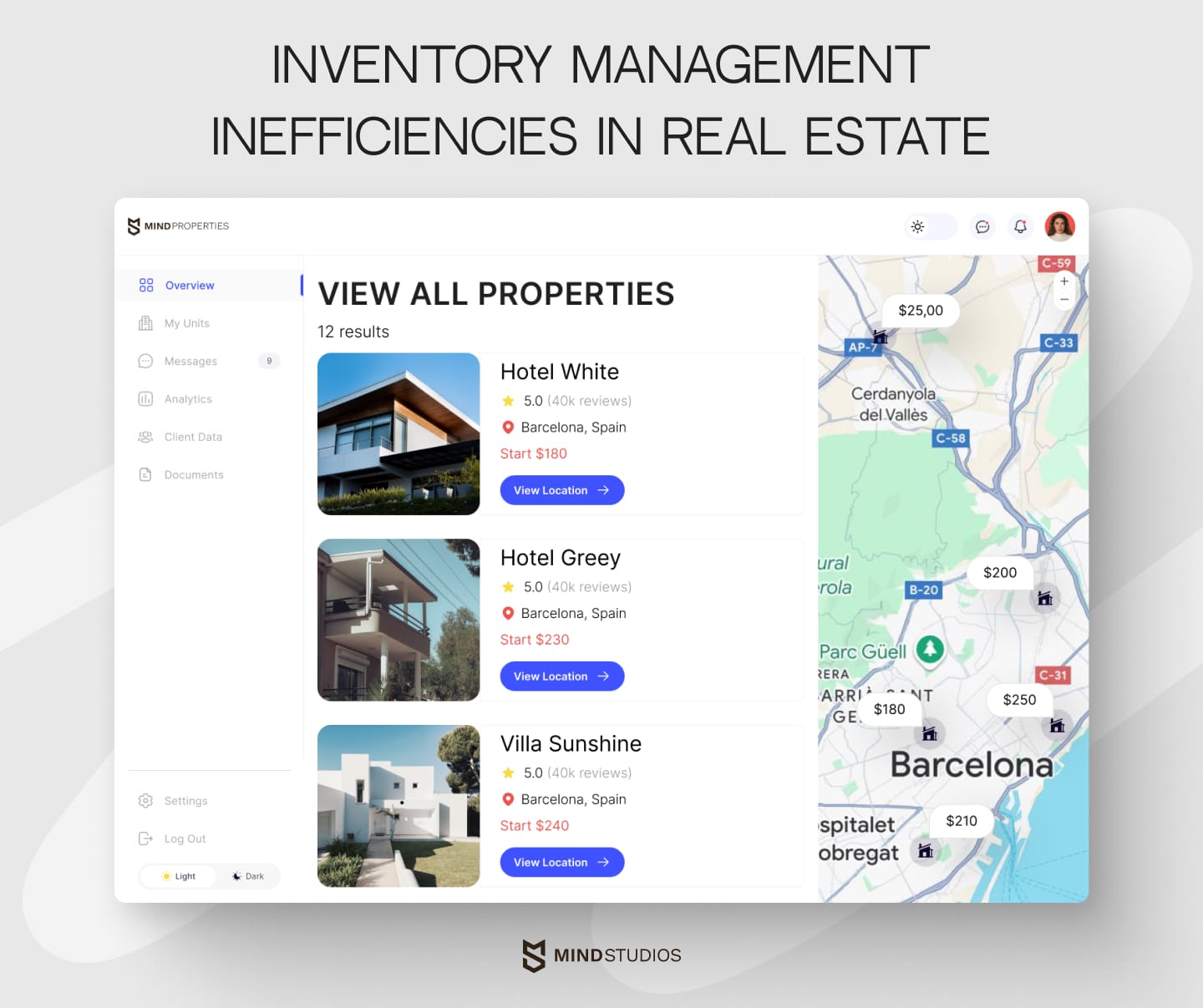
Managing real estate inventory (rental units, commercial spaces, and mixed-use properties) has become increasingly complex. Outdated systems and fragmented data lead to inefficiencies, financial losses, and missed leasing opportunities. The gap between operators with real-time inventory intelligence and those without is widening rapidly.
Below are the causes and effects of inventory inefficiencies:
| What’s changing | Business impact | Competitive gap |
|---|---|---|
| Seasonal demand fluctuates more rapidly | Every 5 days excess vacancy per unit = $60K–95K annual loss on 50-unit portfolio | Institutional operators fill units 30–40% faster using AI pricing |
| Outdated disconnected systems remain common | Manual tracking delays decisions → miss optimal pricing windows | Real-time systems adjust rates hourly while you update spreadsheets quarterly |
| Tenants expect rental flexibility | Static pricing misses high-demand revenue peaks | Dynamic pricing captures 10–15% more revenue from same inventory |
The 4-stage progression from manual tracking to portfolio optimization
Inventory management improvements follow a predictable progression. Most companies start at Stage 1 and move up as they prove ROI at each level. Jumping straight to Stage 4 without data infrastructure usually fails.
Stage 1: Real-time availability that eliminates double-bookings
| What it does | Business impact | When to implement | Mind Studios approach |
|---|---|---|---|
| The centralized system shows unit status instantly across all properties. Updates automatically when status changes. | Eliminates double-bookings, reduces manual availability checks, enables faster prospect responses. | Managing 15+ units where staff waste time calling between properties or prospects see unavailable units. | Build unified dashboards pulling data from existing systems — see everything in one place without replacing working tools. |
Stage 2: Dynamic pricing that captures 10–15% more revenue
| What it does | Business impact | When to implement | Mind Studios approach |
|---|---|---|---|
| Automated pricing adjustments based on real-time demand: occupancy rates, seasonal patterns, market competition, local events. | Captures 10–15% more revenue by charging market-optimal rates. Fills units 20–30% faster during low-demand periods. | The market has seasonal fluctuations, competing with multiple comparable properties, or leaving money on the table during peaks. | Start with pricing recommendations teams can override, prove accuracy over 2–3 months, then increase automation as trust builds. |
Stage 3: Predictive management that reduces vacancy by 30–40%
| What it does | Business impact | When to implement | Mind Studios approach |
|---|---|---|---|
| AI forecasts vacancies 60–90 days out based on lease expirations, payment patterns, maintenance requests, turnover data. Predicts optimal renovation timing. | Reduces vacancy periods 30–40% by starting marketing before units available. Schedules maintenance during low-demand windows. | Managing 50+ units where coordinating turnover, renovations, and marketing creates bottlenecks or unexpected vacancies disrupts forecasts. | Analyze 12–24 months of historical data to identify patterns, build prediction models, and test accuracy before automating marketing and scheduling. |
Stage 4: Portfolio optimization that maximizes ROI allocation
| What it does | Business impact | When to implement | Mind Studios approach |
|---|---|---|---|
| System-level intelligence optimizes across the entire portfolio — shifts marketing budget to highest-conversion properties, recommends renovations by ROI, flags underperformers. | Maximizes portfolio returns by allocating resources where they generate the highest ROI vs. spreading evenly. | Managing 100+ units across multiple properties where portfolio-level decisions significantly impact performance. | Requires an integrated data infrastructure from Stages 1–3. Build a foundation first, and add portfolio optimization once reliable data flows automatically. |
Struggling with vacancy rates above 8% or average time-to-lease over 30 days? Request an inventory optimization analysis where we'll show you exactly which stage delivers the fastest payback for your portfolio size.
Inventory optimization maximizes revenue from existing assets. The final challenge determines whether you can access capital to acquire more assets.
Challenge #6: Capital markets
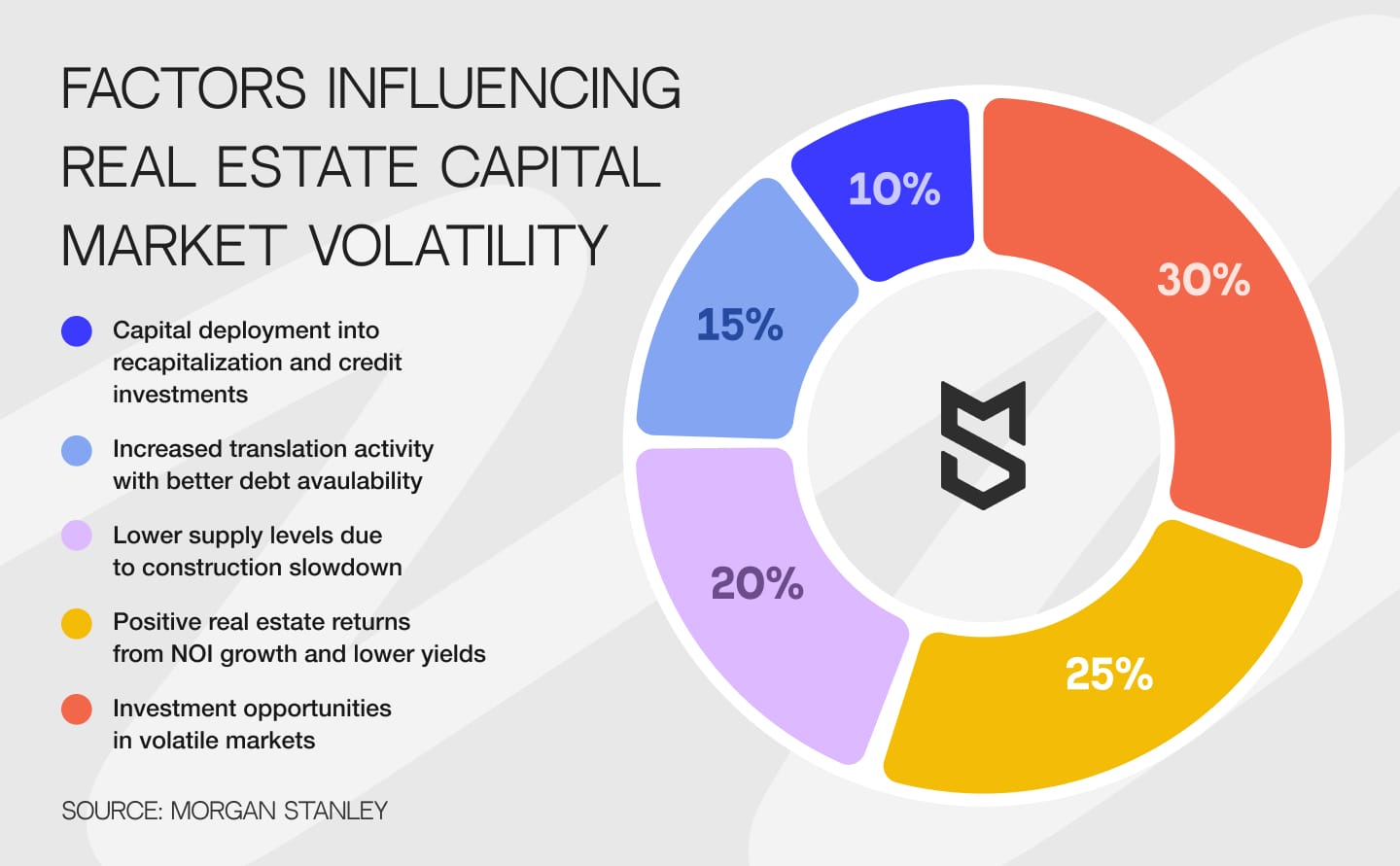
In 2026's competitive funding environment, data speed determines whether investors commit or walk away. Interest rates remain elevated at 4.5–5.5%, making investors highly selective. Due diligence timelines have compressed from 45–60 days to 20–30 days for competitive deals.
Properties with manual reporting spend 3–4 weeks assembling investor packages: spreadsheets from multiple systems, hand-compiled historical data, scattered compliance documentation. By then, institutional investors have already funded competitors who delivered complete data packages in 48 hours through automated platforms.
Properties with digital infrastructure typically secure financing 15–20% faster and at 25–50 basis points better rates. Thus, technology isn't just operational efficiency but a competitive advantage in capital access.
Below are the main challenges, their business impact, and what happens when you can't respond quickly:
| Capital market shift | Funding challenge | Cost of missing deals |
|---|---|---|
| Interest rates remain at 4.5–5.5%, investors are highly selective | Uncertain cash flow → risky long-term planning; developers delay/cancel projects | Projects without strong data lose funding; 20–30% of deals fail during extended due diligence |
| Institutional investors require verified ESG compliance data | Without automated tracking, can't produce documentation for compressed timelines | Miss funding windows entirely as investors choose properties delivering compliance packages in days |
| Due diligence compressed from 45–60 to 20–30 days | Manual assembly too slow; by the time you compile reports, investors funded others | Each missed window delays projects 3–6 months; carrying costs eliminate margins |
| Investors demand real-time performance visibility, not quarterly reports | Manual reporting can't provide the transparency investors expect | 25–50 bps financing premium or rejection as investors choose properties with live dashboard access |
From reactive reporting to predictive capital readiness
Most properties assemble investor reports after funding opportunities appear. By 2026, competitive advantage belongs to properties that maintain continuous capital readiness, where financial modeling, performance data, and compliance documentation stay investor-ready at all times.
This transformation has three components:
1. Instant scenario modeling (not quarterly projections)
AI-powered financial modeling that simulates different market conditions, interest rate scenarios, and occupancy assumptions in real-time. Instead of waiting weeks for analysts to build pro formas, investors receive interactive models they can adjust themselves during initial meetings.
Example:
- Dynamic financial models with API access that let investors test their own assumptions (vacancy rates, exit cap rates, refinancing timing) and see immediate impact on returns.
- Integration with market data feeds ensures projections reflect current conditions, not outdated quarterly estimates.
2. Continuous performance transparency (not periodic reports)
Real-time dashboards that give investors direct access to operational metrics: current occupancy, rent collection rates, maintenance costs, energy consumption, and tenant satisfaction scores. Updates automatically, eliminating the 2–3 week lag between performance changes and investor awareness.
Example:
- Secure investor portals with role-based access showing live property performance across customizable timeframes.
- Automated alerts when key metrics (occupancy, NOI, debt service coverage) cross predetermined thresholds, enabling proactive investor communication before problems escalate.
3. Alternative capital access through data quality (not traditional lending only)
Blockchain-based smart contracts, tokenization platforms, and institutional crowdfunding all require pristine data infrastructure. Properties with comprehensive digital records can access financing channels completely closed to those operating on spreadsheets and manual processes.
Example:
- Blockchain-ready data structures and API access that enable integration with emerging PropTech financing platforms and tokenization services.
- Standardized data formats that meet institutional investor requirements across traditional lending, private equity, and alternative capital sources without manual reformatting.
Lost a funding opportunity because you couldn't assemble investor packages fast enough? Schedule a capital readiness audit where we'll analyze your current systems, identify the specific bottlenecks costing you deals, and show you exactly how automated reporting delivers measurable ROI in your next funding round.
Bottom line
The real estate market in 2026 rewards speed: speed of cost detection, speed of compliance reporting, speed of leasing decisions, speed of investor documentation.
Companies with integrated systems make decisions in hours. Companies with manual processes make the same decisions in weeks and lose deals in the gap.
The six challenges in this article aren't independent problems. They're symptoms of the same root issue: operational architecture built for manual coordination in a market that now runs on automated intelligence.
Off-the-shelf software handles standard workflows. Custom platforms handle your actual workflows. Mind Studios builds systems that match your business model, not the other way around. We help real estate companies cut operational costs, speed up leasing cycles, meet regulatory requirements, and access capital faster.
Schedule a free operational diagnostic where we'll analyze your current systems, identify which of these six challenges is costing you the most money, and show you exactly where technology delivers the fastest ROI.